Trees · Fagaceae
Holm oak
Quercus ilex
Spanish EncinaCatalan AlzinaNative8–25 mEvergreen
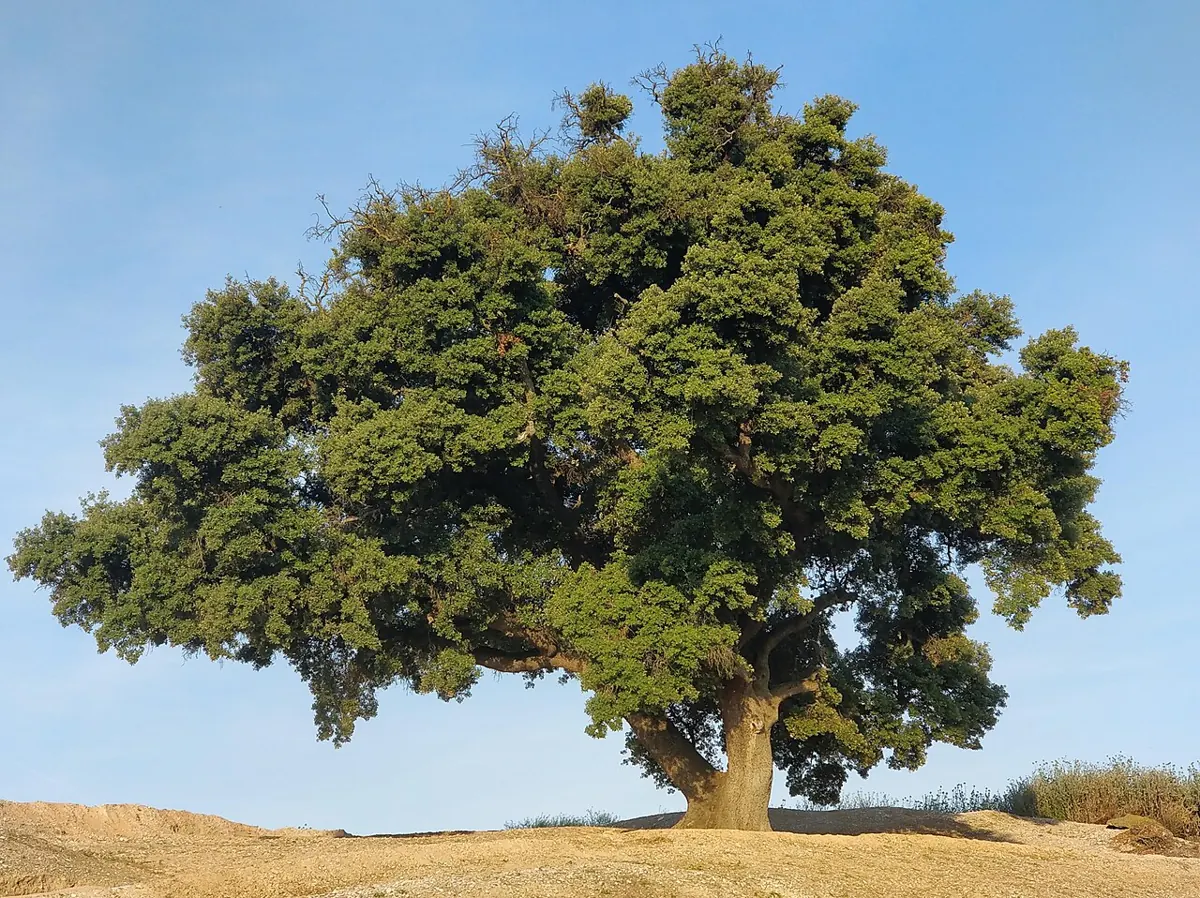
An evergreen tree with tough leaves, dark green above and grey beneath, that bears acorns.
- LeafBroad and flat
- LeafYes, a single blade
- ShapeOval
- ShapeSpear-shaped
- EdgeSmooth
- EdgeToothed
- EdgePrickly
- On the twigOne at a time, staggered
- In winterYes, always green
- BarkFurrowed
- FruitAcorn
The leaf
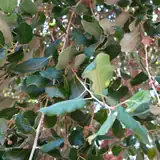
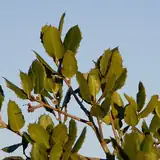
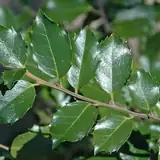
Tough, leathery leaves, 2 to 7 cm, oval or lance-shaped, dark green above and greyish white and felted beneath. The edge may be smooth or have prickly teeth, especially on regrowth and low branches.
The bark
Dark grey, almost black, hard and broken into small squares by fine cracks. It is never corky.
The fruit
Elongated acorns 2 to 3 cm long, with a cup of tight grey scales covering a third of them. They ripen in the autumn of the same year.
The flower
In spring it is covered in hanging golden-yellow catkins, the male flowers, which tint the whole crown. The female ones are tiny and grow on the new twigs.
- Jan
- Feb
- Mar
- Apr
- May
- Jun
- Jul
- Aug
- Sep
- Oct
- Nov
- Dec
Habit
A tree 8 to 25 m tall, with a short trunk and a broad, dense, rounded crown, always dark green. In closed woodland it often grows as several trunks resprouting from the stool.
Where it grows
It is the tree that would form the natural forest across much of lowland Catalonia, from the coast to the middle mountains. In the Penedès it grows in woods alongside the Aleppo pine and at the edges of the vineyards, and it is widely planted in streets and parks.
What it can be mistaken for
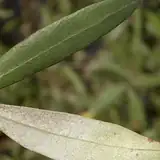
The cork oak has thick, soft cork bark. The kermes oak is a shrub with leaves that are green and shiny on both sides and acorns with prickly cups. The olive has narrow, opposite leaves that are silvery beneath. The holly has shiny, spiny leaves with no grey underside.
A story
Holm oak made the best charcoal: in Catalan woods you can still see the small, flat clearings where the charcoal kilns were built. Its acorns fed the pigs, and those of inland holm oaks, which are sweeter, were also roasted and eaten.
Find out more
- Tree: Kraumor, CC BY-SA 4.0
- Leaf: Liné1, CC BY-SA 3.0
- Bark: Agnieszka Kwiecień, Nova, CC BY-SA 4.0
- Fruit: Cebes, CC BY 3.0