Trees · Aquifoliaceae
Holly
Ilex aquifolium
Spanish AceboCatalan GrèvolNative3–10 mEvergreen
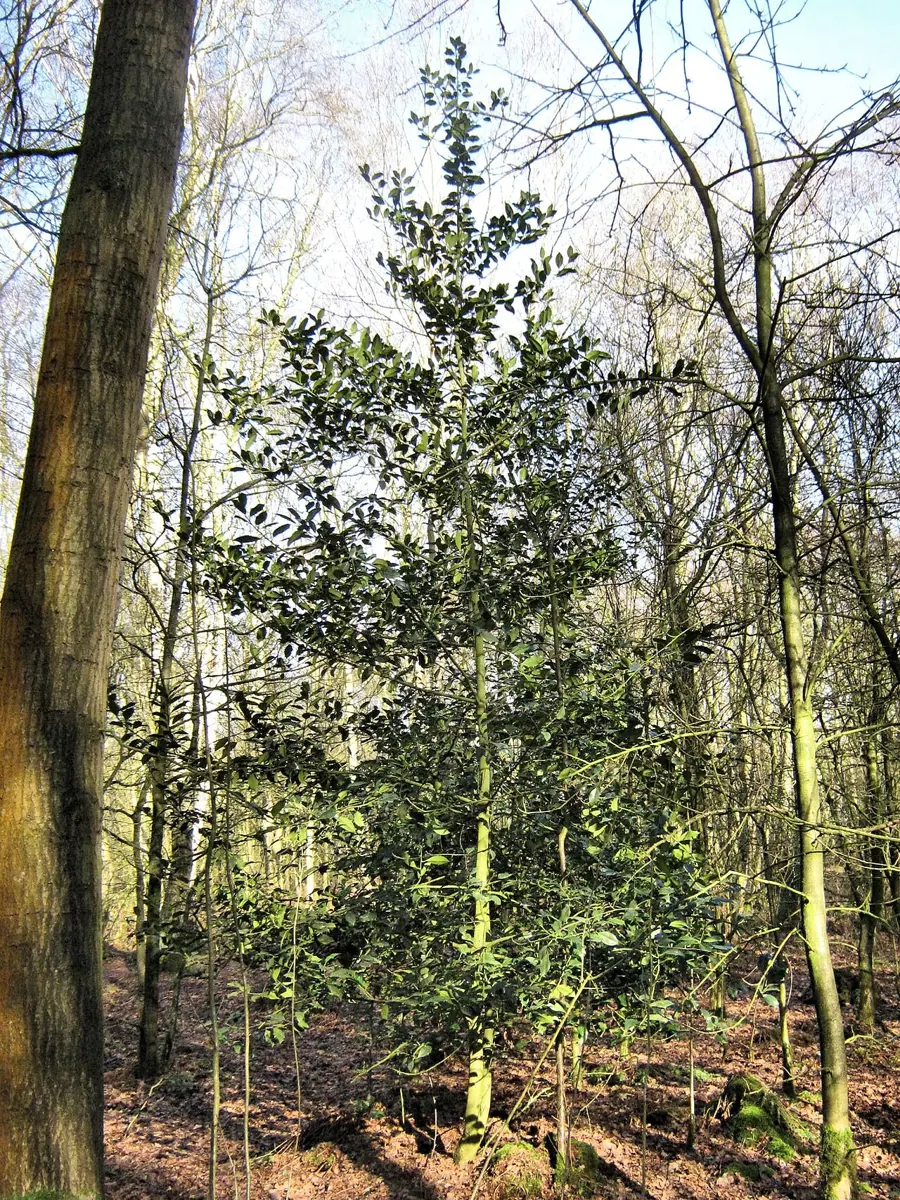
Very glossy, dark green, prickly leaves, and red berries in winter.
- LeafBroad and flat
- LeafYes, a single blade
- ShapeOval
- EdgePrickly
- EdgeSmooth
- On the twigOne at a time, staggered
- In winterYes, always green
- BarkSmooth
- FruitFleshy
The leaf
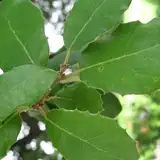
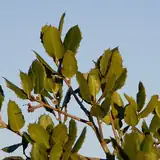
The leaf is thick and a very glossy dark green, as if waxed. On the lower branches the edge is wavy and full of prickles; on the upper branches, out of reach of animals, many leaves are smooth or have just one prickle at the tip.
The bark
The bark is greenish-grey, smooth and thin throughout the tree's life.
The fruit
The fruits are shiny red berries that ripen in autumn and last all winter. Only female trees bear them. They are poisonous to people.
The flower
In spring it bears small white or pinkish four-petalled flowers in little clusters beside the leaves. There are male and female trees.
- Jan
- Feb
- Mar
- Apr
- May
- Jun
- Jul
- Aug
- Sep
- Oct
- Nov
- Dec
Habit
It is usually a shrub or small tree with a dense, conical crown, dark all year round. In very damp places it can form small woods.
Where it grows
It grows in the shade of damp beech, fir and oak woods. In Catalonia it is found in the Pyrenees, the Pre-Pyrenees and the Montseny, and it does not grow in the Penedès.
What it can be mistaken for
A young or resprouting holm oak has similar prickly leaves, but they are grey and downy underneath, and it bears acorns. The kermes oak has much smaller prickly leaves and is a shrub of dry scrubland.
A story
Its berry-laden branches are a traditional Christmas decoration. To stop it being stripped from the wild, it is protected in Catalonia and may not be uprooted or cut in the countryside; the holly on sale is cultivated.
Find out more
- Tree: Jonathan Kington, CC BY-SA 2.0
- Leaf: James St. John, CC BY 2.0
- Bark: Hubi47, CC BY 3.0
- Fruit: Paulo Etxeberria, CC BY-SA 3.0