Trees · Oleaceae
Olive
Olea europaea
Spanish OlivoCatalan OliveraNative4–10 mEvergreen
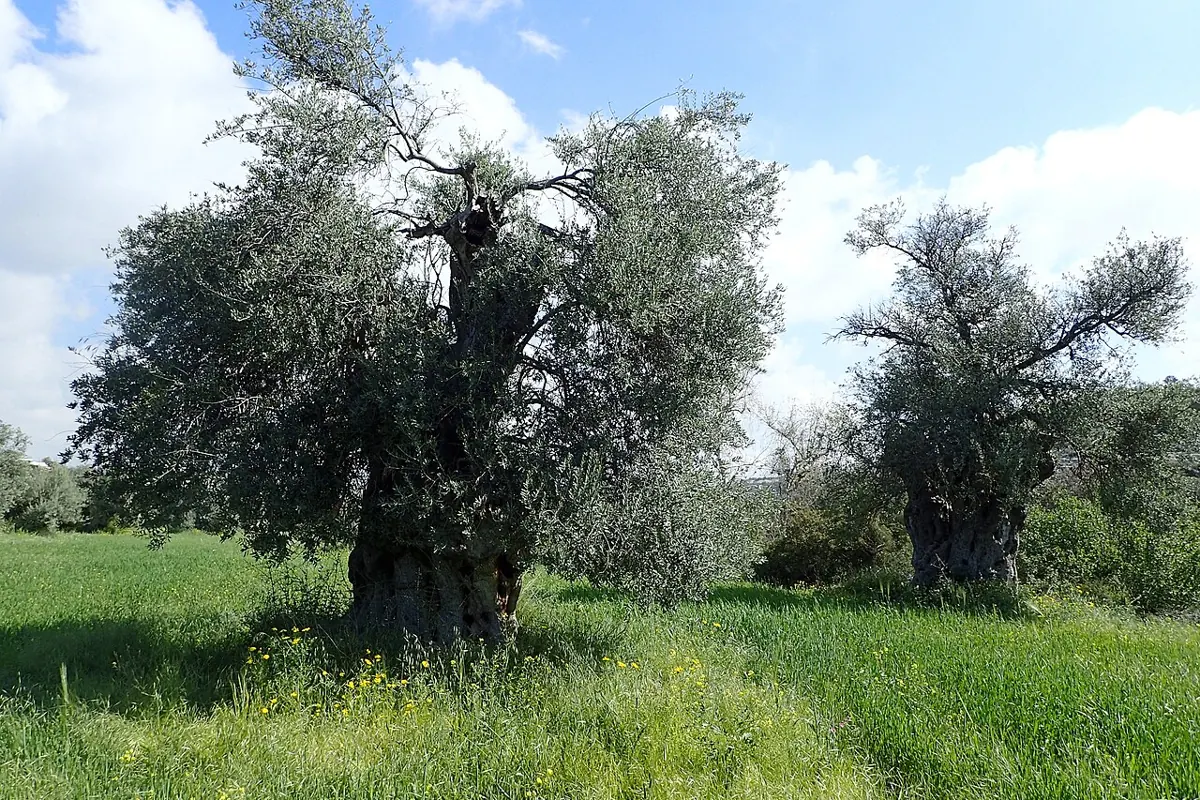
Narrow leaves, grey-green on top and silvery underneath, and a twisted trunk.
- LeafBroad and flat
- LeafYes, a single blade
- ShapeSpear-shaped
- ShapeLong and narrow
- EdgeSmooth
- On the twigIn pairs, facing each other
- In winterYes, always green
- BarkFurrowed
- FruitFleshy
The leaf
The leaf is narrow, elongated, thick and smooth-edged. It is dark green or greyish on top and silvery underneath, thanks to tiny scale-like hairs. The leaves grow in opposite pairs.
The bark
The bark is grey, thin on the branches and cracked on the trunk. Old olive trees have thick, twisted, knotted trunks that are often hollow or split into several parts.
The fruit
Olives are fleshy, oval fruits with a hard stone. They start green and, as they ripen in autumn and winter, turn purple and then black.
The flower
It flowers in late spring. The flowers are small and white, in short clusters among the leaves.
- Jan
- Feb
- Mar
- Apr
- May
- Jun
- Jul
- Aug
- Sep
- Oct
- Nov
- Dec
Habit
A tree with a short, thick trunk and a rounded, grey-green crown. The wild olive, called ullastre in Catalan, is smaller, with shorter leaves and sometimes spiny twigs.
Where it grows
It is grown almost everywhere in Catalonia except the mountains. In the Penedès olive trees are very common along terrace walls and among the vineyards, and the wild olive grows in the scrubland.
What it can be mistaken for
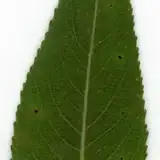
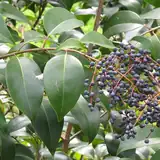
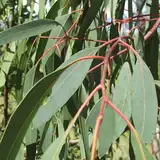
The white willow has narrow, silvery leaves, but they are alternate, toothed and fall in autumn. The glossy privet also has opposite leaves, but they are broader and glossy, without a silvery underside. The river red gum has much longer, sickle-shaped leaves.
A story
The Arbequina variety, the most widely planted in Catalonia, is named after Arbeca, in Les Garrigues. In the Montsià, near Ulldecona, there are olive trees estimated to be over a thousand years old.
Find out more
- Tree: Krzysztof Ziarnek, Kenraiz, CC BY-SA 4.0
- Leaf: Desconocido, CC BY-SA 3.0
- Bark: Krzysztof Ziarnek, Kenraiz, CC BY-SA 4.0
- Fruit: Javier martin, Public domain