Trees · Fabaceae
Honey locust
Gleditsia triacanthos
Spanish Acacia de tres espinasCatalan Acàcia de tres punxesIntroduced10–25 mDeciduous
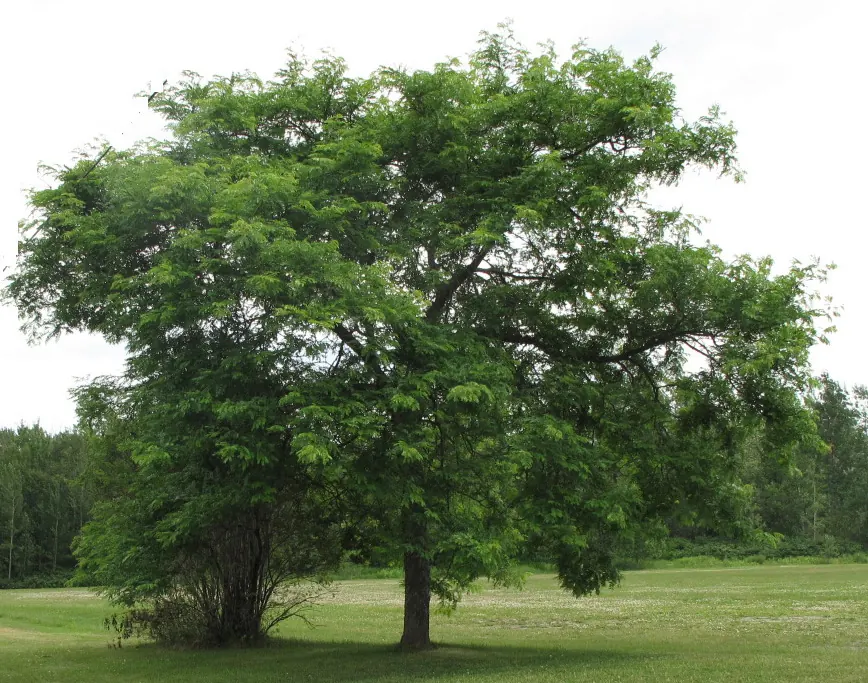
A light crown of tiny leaflets and, in winter, huge twisted brown pods hanging from the branches.
- LeafBroad and flat
- LeafLeaflets in two rows
- ShapeOval
- ShapeSpear-shaped
- EdgeSmooth
- EdgeToothed
- On the twigOne at a time, staggered
- In winterNo, it loses them
- BarkFurrowed
- FruitPod
The leaf
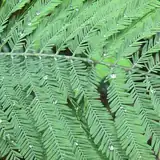
A compound leaf of small leaflets, 1.5 to 3 cm, oval and almost smooth-edged. The same tree has both pinnate leaves and bipinnate ones, divided twice. The leaves come out late and turn yellow early in autumn.
The bark
Dark, with cracks that form long, narrow plates. The wild form has large spines on the trunk, branching in three, but many street trees are spineless varieties.
The fruit
Very long pods, 20 to 40 cm, flat, twisted and reddish brown. Inside there is a sweet pulp.
The flower
Small greenish flowers in short clusters, not showy but fragrant. It flowers in late spring.
- Jan
- Feb
- Mar
- Apr
- May
- Jun
- Jul
- Aug
- Sep
- Oct
- Nov
- Dec
Habit
A tree with a wide, open, airy crown that lets a lot of light through.
Where it grows
Planted in streets, car parks and parks in many Catalan towns. It comes from eastern North America.
What it can be mistaken for
The black locust has bigger leaflets, small paired spines next to each leaf, and short pods. The silver wattle has much finer bipinnate leaves, silvery and evergreen.

A story
Its English name, honey locust, comes from the sweet pulp in the pods, which people ate and fed to livestock. Its Spanish name means "three-spined acacia": the spines on the trunk can be more than 10 cm long.
Find out more
- Tree: Ayotte, Gilles, 1948-, CC BY-SA 4.0
- Leaf: Aethonatic, CC0
- Bark: Gmihail at Serbian Wikipedia, CC BY-SA 3.0 rs
- Fruit: Chris Light, CC BY-SA 4.0