Trees · Salicaceae
White willow
Salix alba
Spanish Sauce blancoCatalan Salze blancNative10–25 mDeciduous
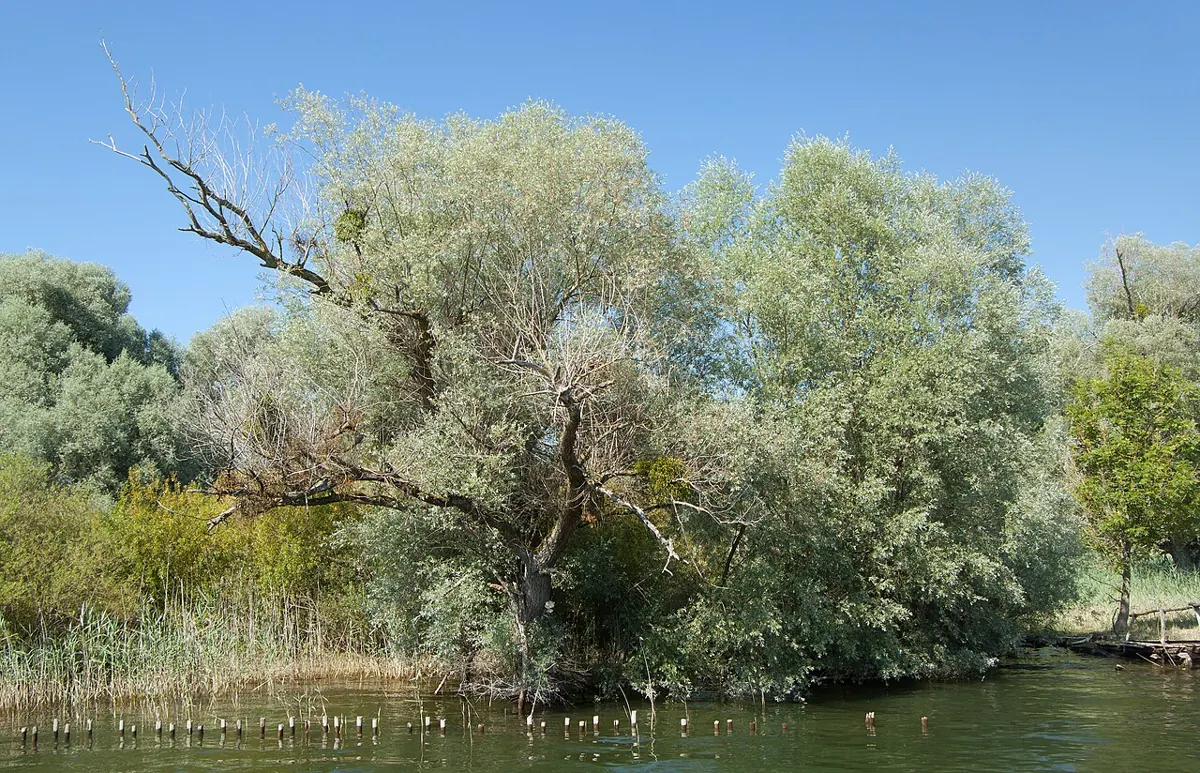
A riverside tree with long, narrow leaves that are silvery underneath.
- LeafBroad and flat
- LeafYes, a single blade
- ShapeSpear-shaped
- ShapeLong and narrow
- EdgeToothed
- On the twigOne at a time, staggered
- In winterNo, it loses them
- BarkFurrowed
- FruitCapsule that splits open
The leaf
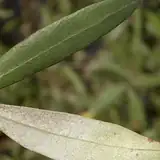
The leaves are long, narrow and pointed, with finely toothed edges. They are covered in silky hairs that give them a silvery sheen, especially underneath, so from a distance the crown looks grey-green.
The bark
The trunk has grey-brown bark with vertical furrows that cross over each other to form a network. Young twigs are flexible and yellowish-green or olive.
The fruit
The fruits are small capsules gathered in green catkins. When they open in spring they release tiny seeds with white fluff that drift away on the wind.
The flower
It flowers just as the leaves come out, in upright catkins: yellow on male trees and greenish on female trees. Bees visit them a lot, as they are among the first flowers of the year.
- Jan
- Feb
- Mar
- Apr
- May
- Jun
- Jul
- Aug
- Sep
- Oct
- Nov
- Dec
Habit
A tree with an often leaning trunk and a broad, irregular, airy crown. Its branches do not hang down: the garden weeping willow is a different species, or a hybrid, planted as an ornamental.
Where it grows
It grows on the banks of rivers and ditches and in waterlogged soils throughout Catalonia. It almost always appears alongside black poplars, white poplars and alders.
What it can be mistaken for
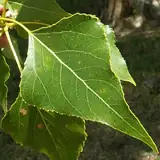
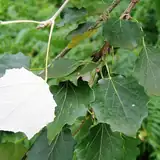
The olive also has narrow leaves that are silvery underneath, but they have smooth edges, grow in opposite pairs and do not fall in winter. The leaves of the black poplar and the white poplar are much broader.
A story
Salicin, a remedy for fever and pain, used to be extracted from willow bark. From this compound, named after Salix, came salicylic acid, the forerunner of aspirin.
Find out more
- Tree: H. Zell, CC BY-SA 3.0
- Leaf: Dmitry Makeev, CC BY-SA 4.0
- Bark: S Sepp, CC BY-SA 3.0
- Fruit: Willow, CC BY-SA 2.5