Trees · Fagaceae
Portuguese oak
Quercus faginea
Spanish QuejigoCatalan Roure de fulla petitaNative8–20 mDeciduous
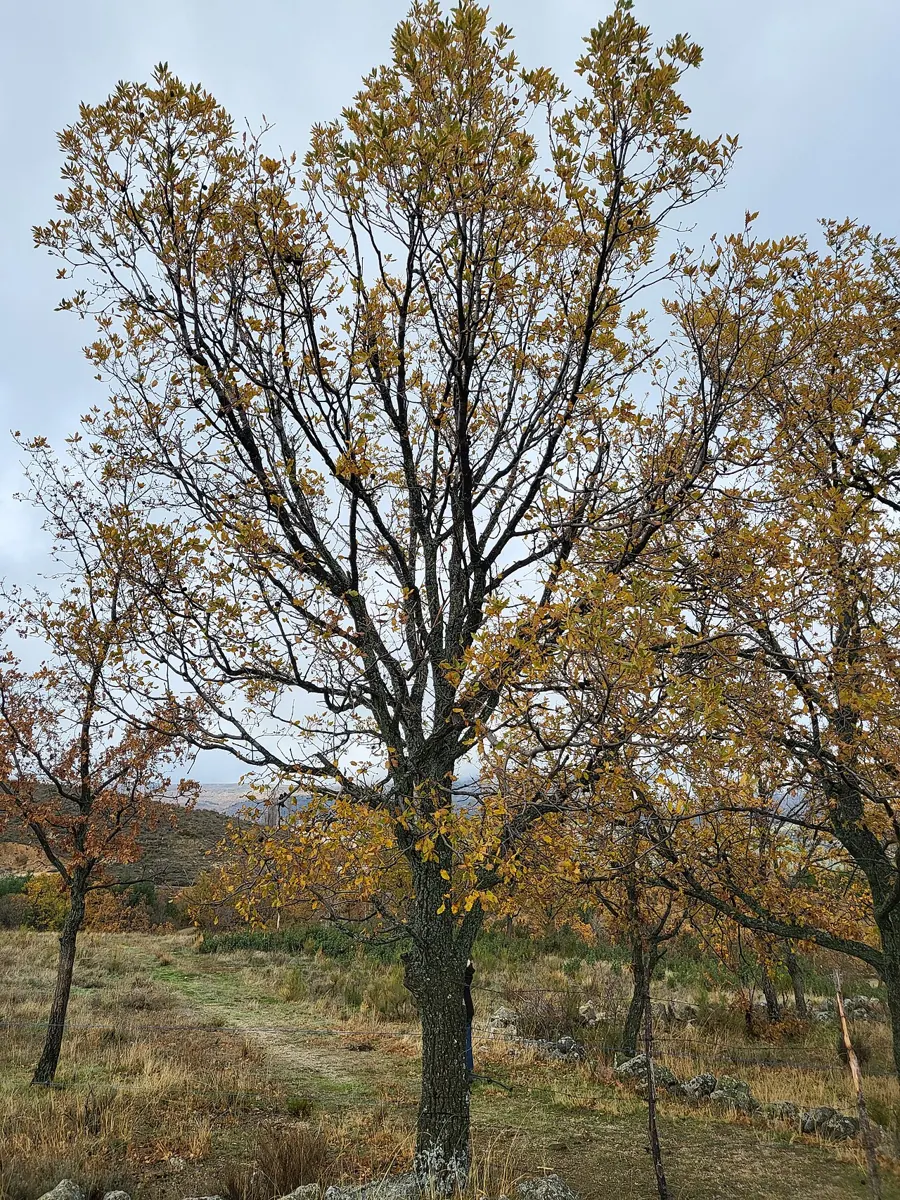
An oak with oval, toothed leaves, green above and grey beneath, that hang on until spring.
- LeafBroad and flat
- LeafYes, a single blade
- ShapeOval
- EdgeToothed
- On the twigOne at a time, staggered
- In winterNo, it loses them
- BarkFurrowed
- FruitAcorn
The leaf
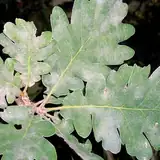
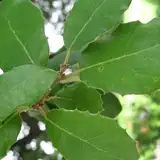
Leaves 4 to 10 cm long, oval, with evenly spaced, sometimes slightly pointed teeth. They are greyish green above, whitish and felted beneath, and quite tough.
The bark
Grey or brown, broken into small square plates by shallow cracks.
The fruit
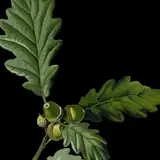
Elongated acorns 1.5 to 3.5 cm long, in a cup of flat, tight scales. The tree often carries oak galls too: round, woody balls caused by tiny wasps.
The flower
Hanging yellowish catkins that come out with the new leaves, in spring.
- Jan
- Feb
- Mar
- Apr
- May
- Jun
- Jul
- Aug
- Sep
- Oct
- Nov
- Dec
Habit
A tree 8 to 20 m tall with a rounded crown, though it often stays a small tree. The dry leaves hang on the tree for much of the winter.
Where it grows
It grows in inland Spain, in areas with a Mediterranean climate and cold winters, often alongside holm oak. In Catalonia it is seen mostly in the provinces of Lleida and Tarragona.
What it can be mistaken for
The downy oak and the sessile oak have lobed leaves, not merely toothed ones. The holm oak has darker, evergreen leaves. The Portuguese oak is recognised by its toothed leaves, grey beneath, that fall late.
A story
Its galls, rich in tannins, were used to tan hides and make ink. Its hard wood has served for firewood, charcoal and farm tools.
Find out more
- Tree: Xemenendura, CC BY-SA 4.0
- Leaf: Xemenendura, CC BY-SA 2.1 es
- Bark: Vojtěch Zavadil, CC BY-SA 3.0
- Fruit: SABENCIA Guillermo César Ruiz, CC BY-SA 4.0