Trees · Lauraceae
Bay laurel
Laurus nobilis
Spanish LaurelCatalan LlorerNative3–10 mEvergreen
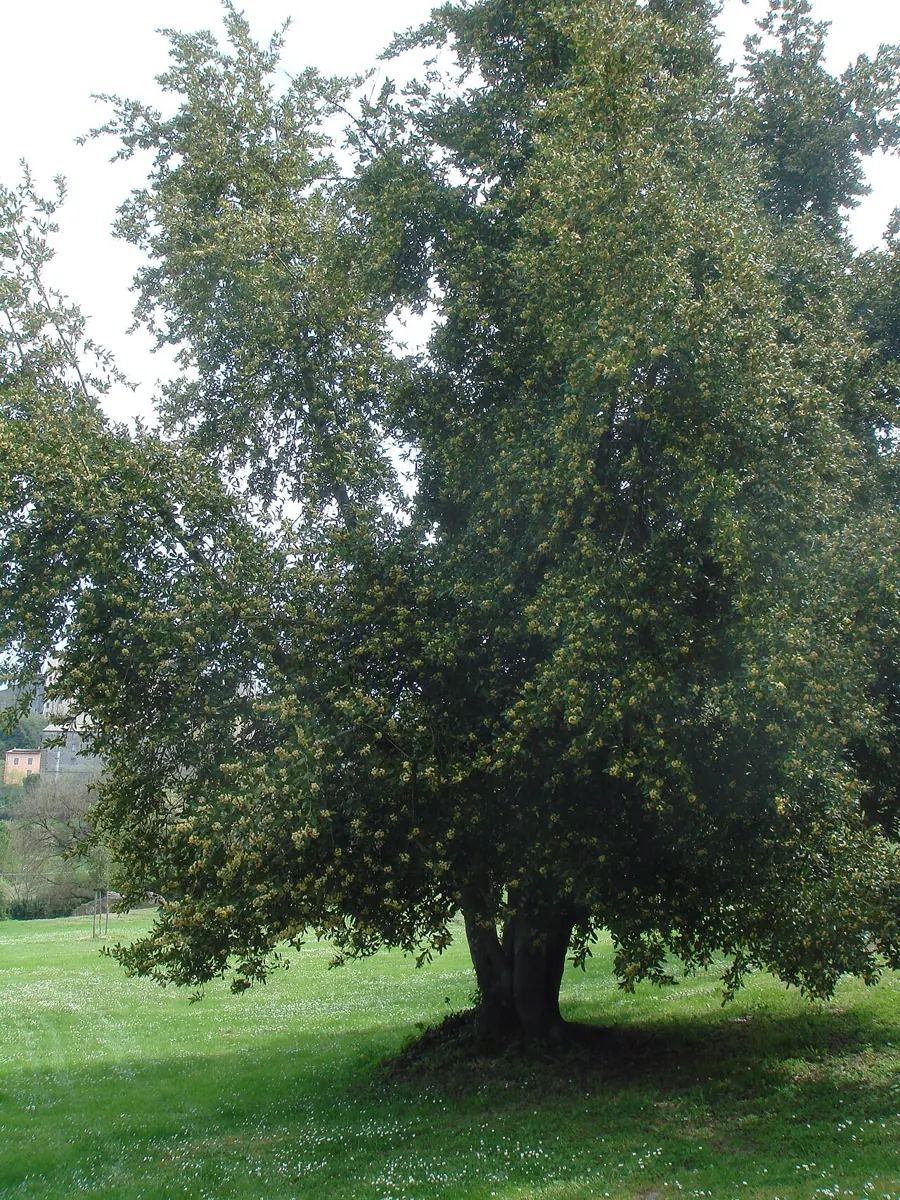
Tough, glossy, lance-shaped leaves that smell of stew when crushed.
- LeafBroad and flat
- LeafYes, a single blade
- ShapeSpear-shaped
- EdgeSmooth
- On the twigOne at a time, staggered
- In winterYes, always green
- BarkSmooth
- FruitFleshy
The leaf
The leaf is lance-shaped and leathery, a glossy dark green, with a smooth and often slightly wavy edge. When crushed it gives off the smell we all know from the kitchen.
The bark
The bark is smooth, thin and dark grey or greenish, even on mature trunks.
The fruit
The fruit is an oval berry one to two centimetres long, green at first and shiny black when it ripens in autumn. Only female trees bear it.
The flower
It flowers in late winter and spring. The flowers are small and greenish-yellow, in little clusters beside the leaves. There are male and female trees.
- Jan
- Feb
- Mar
- Apr
- May
- Jun
- Jul
- Aug
- Sep
- Oct
- Nov
- Dec
Habit
It is usually a shrub or small tree with a dense, conical or oval crown, dark green all year round. It sprouts vigorously from the base and forms clumps of several stems.
Where it grows
In the wild it grows in damp, shady ravines near the coast. It is very commonly planted in gardens, courtyards and vegetable plots all over Catalonia.
What it can be mistaken for
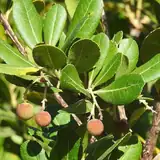
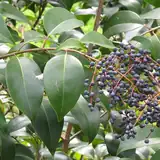
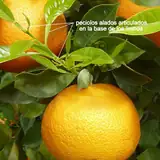
The strawberry tree has a similar leaf, but toothed and without any smell. The glossy privet has its leaves in opposite pairs. The bitter orange also has aromatic leaves, but with a stalk widened into a wing.
A story
In ancient Greece and Rome victors and poets were crowned with laurel; that is where words like laureate come from. Today its dried leaf is one of the most widely used seasonings in Mediterranean cooking.
Find out more
- Tree: G.Hagedorn, CC BY-SA 3.0
- Leaf: Marija Gajić, CC BY-SA 4.0
- Bark: Oktoober, CC BY-SA 4.0
- Fruit: SABENCIA Bertu Ordiales, CC BY-SA 4.0