Trees · Rutaceae
Bitter orange
Citrus × aurantium
Spanish Naranjo amargoCatalan Taronger amargIntroduced4–8 mEvergreen
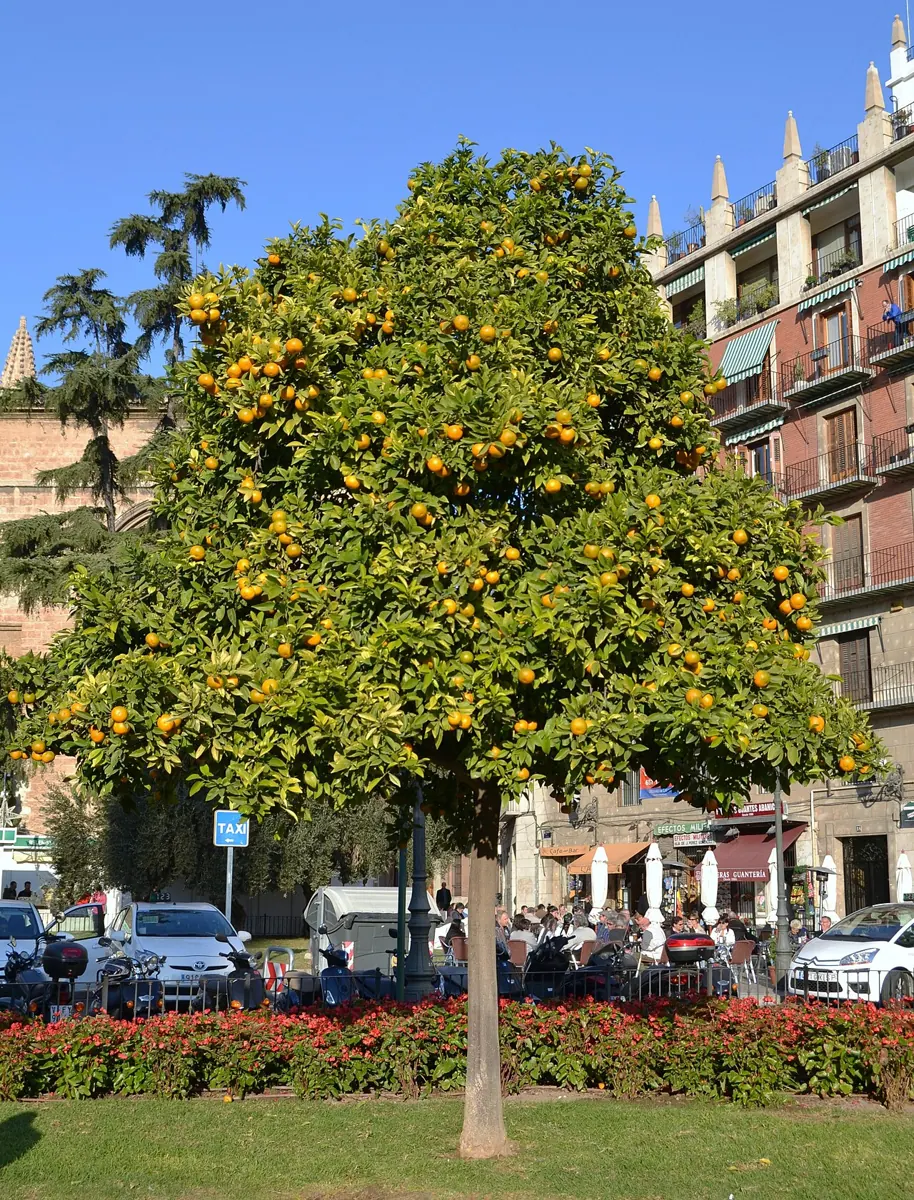
A small evergreen street tree, laden in winter with oranges that nobody picks.
- LeafBroad and flat
- LeafYes, a single blade
- ShapeOval
- EdgeSmooth
- On the twigOne at a time, staggered
- In winterYes, always green
- BarkSmooth
- FruitFleshy
The leaf
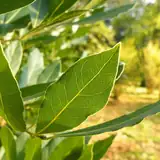
A simple, oval leaf with a smooth or slightly wavy edge, dark green and glossy. The stalk has two broad wings, wider than on the sweet orange. It smells of citrus when crushed.
The bark
Smooth and greenish grey. The branches may have spines.
The fruit
An orange with rough, very aromatic skin and sour, bitter flesh. It ripens in winter and stays on the tree for a long time.
The flower
White flowers, orange blossom, with a very strong scent. It flowers in spring.
- Jan
- Feb
- Mar
- Apr
- May
- Jun
- Jul
- Aug
- Sep
- Oct
- Nov
- Dec
Habit
A small tree with a dense, rounded crown, often clipped into a ball in the streets.
Where it grows
Widely planted in streets and squares along the Catalan coast and the whole of eastern Spain, where hard frosts are rare.
What it can be mistaken for
The sweet orange is almost identical, but its fruit is sweet, its skin smoother and the wing on the leaf stalk narrower. The bay laurel has similar leaves, but narrower and with no wings on the stalk.
A story
Its oranges aren't eaten raw, but they are the Seville oranges of the bitter marmalade so loved in Britain. Its flowers are distilled to make orange flower water and neroli oil.
Find out more
- Tree: Joanbanjo, CC BY-SA 3.0
- Leaf: Philmarin, CC BY-SA 4.0
- Fruit: Zeynel Cebeci, CC BY-SA 4.0