Trees · Fabaceae
Black locust
Robinia pseudoacacia
Spanish Falsa acaciaCatalan AcàciaIntroduced10–25 mDeciduous
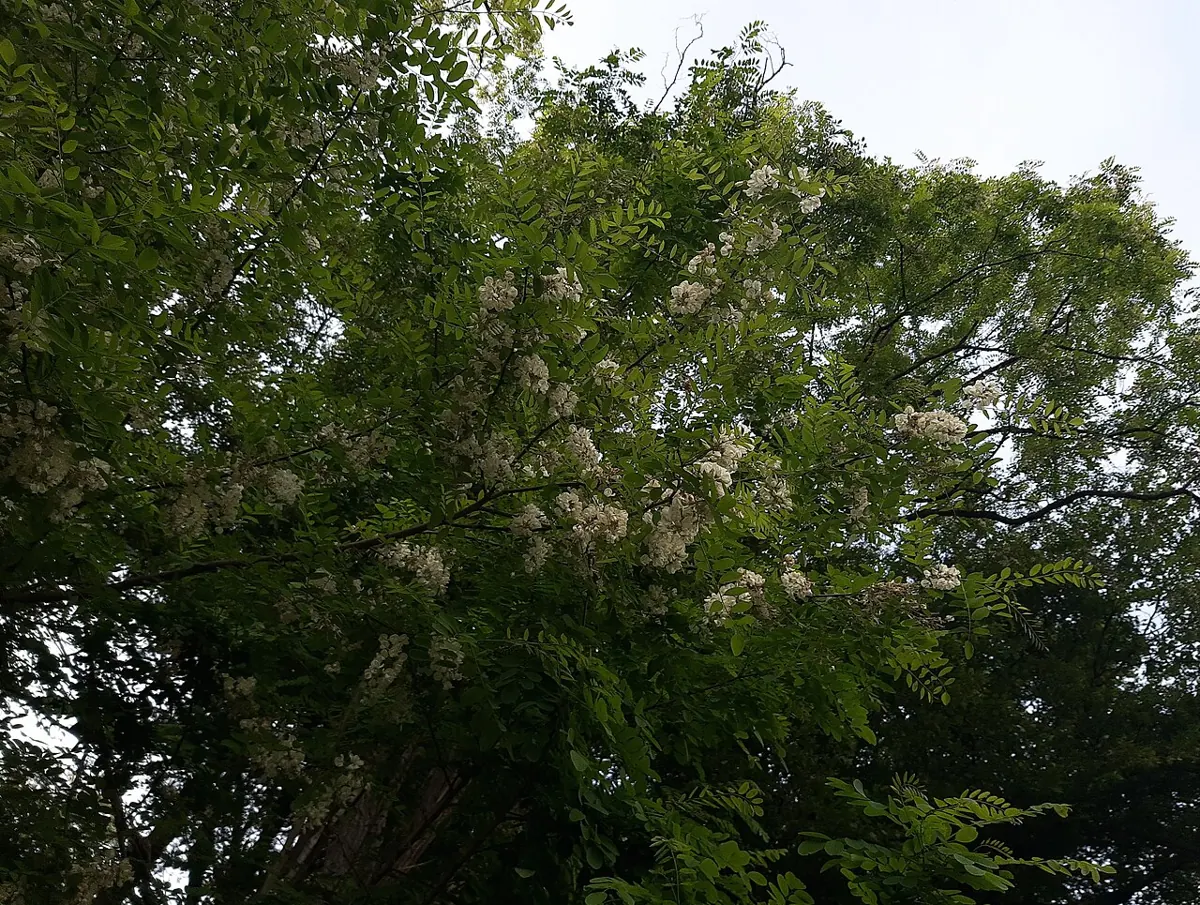
Compound leaves of oval leaflets, a pair of spines at the base of each leaf, and fragrant white clusters in April.
- LeafBroad and flat
- LeafLeaflets in two rows
- ShapeOval
- EdgeSmooth
- On the twigOne at a time, staggered
- In winterNo, it loses them
- BarkFurrowed
- FruitPod
The leaf
A compound leaf of 9 to 19 oval leaflets with rounded tips and smooth edges. At the base of each leaf there are two short, strong spines.
The bark
Greyish brown, with deep furrows that form thick, criss-crossing ridges, like a net.
The fruit
Flat brown pods, 5 to 10 cm long, that stay hanging on the tree through the winter.
The flower
Hanging clusters of white, butterfly-shaped flowers with a strong scent. It flowers in April and May and draws a lot of bees.
- Jan
- Feb
- Mar
- Apr
- May
- Jun
- Jul
- Aug
- Sep
- Oct
- Nov
- Dec
Habit
A tree with an irregular, thin crown that sends up many suckers from the roots and forms thickets.
Where it grows
Widely planted along streets, roads and embankments all over Catalonia. It has gone wild along rivers and roadsides, where it behaves as an invasive species.
What it can be mistaken for
The honey locust has much smaller leaflets and, if it has spines at all, they are on the trunk and branched. The Japanese pagoda tree has pointed leaflets, no spines and flowers in summer. The tipu tree has yellow flowers and winged fruit.
A story
The honey sold as "acacia honey" actually comes from this tree. Its flowers are eaten dipped in batter and fried as fritters, although the rest of the plant is poisonous.
Find out more
- Tree: Gerda Arendt, CC0
- Leaf: HoHey22, CC BY-SA 4.0
- Bark: Famartin, CC BY-SA 4.0
- Fruit: Famartin, CC BY-SA 4.0
- Flower: Ввласенко, CC BY-SA 3.0