Trees · Oleaceae
Narrow-leaved ash
Fraxinus angustifolia
Spanish FresnoCatalan Freixe de fulla petitaNative10–25 mDeciduous
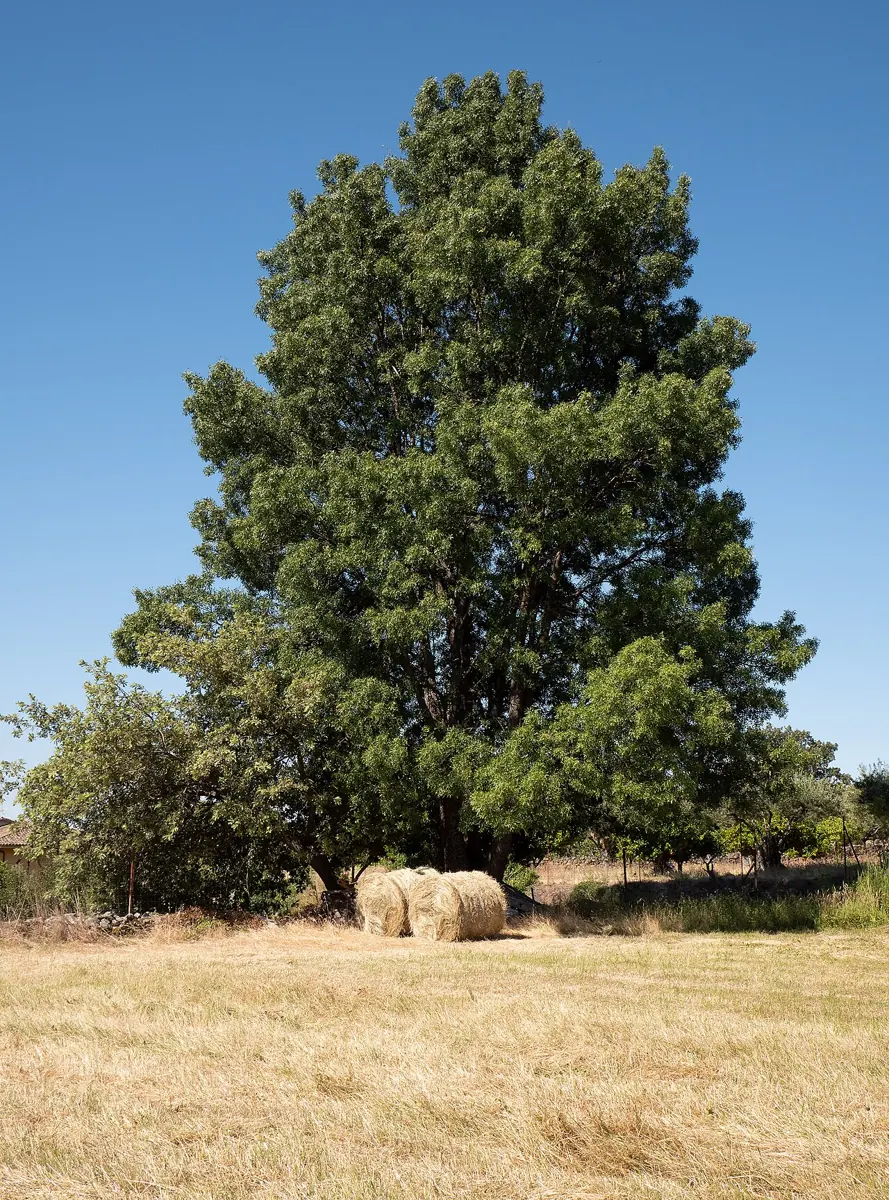
Compound leaves of narrow leaflets growing in opposite pairs, and clusters of winged fruits.
- LeafBroad and flat
- LeafLeaflets in two rows
- ShapeSpear-shaped
- EdgeToothed
- On the twigIn pairs, facing each other
- In winterNo, it loses them
- BarkFurrowed
- FruitWinged
The leaf
Each leaf is made up of seven to thirteen narrow, lance-shaped leaflets with toothed edges. The leaves grow in opposite pairs along the twig. The winter buds are brown, not black.
The bark
The bark is grey; smooth on young trees and, over the years, cracked into a network of small, square plates.
The fruit
The fruits are samaras: a seed with a long wing, like a little tongue, about three or four centimetres long. They hang in dense clusters, green in summer and brown in autumn, and many stay on the tree through the winter.
The flower
It flowers in winter, before the leaves come out. The flowers are small, without petals, in dark purple clusters, and easily go unnoticed.
- Jan
- Feb
- Mar
- Apr
- May
- Jun
- Jul
- Aug
- Sep
- Oct
- Nov
- Dec
Habit
A tree with a rounded, fairly open crown. In the countryside you see old ash trees with thick trunks and many branches sprouting from the same height, because they used to be cut back regularly.
Where it grows
It grows along rivers and streams, on valley floors and in damp meadows throughout Catalonia, especially in the lowlands. In the northern mountains it is replaced by the common ash, Fraxinus excelsior, which has black buds.
What it can be mistaken for
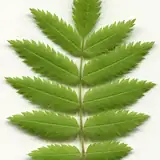
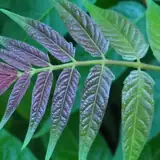
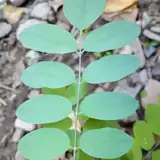
The rowan also has leaves with many toothed leaflets, but they are alternate and it bears red berries. The tree of heaven and the black locust have alternate compound leaves: the tree of heaven with larger leaflets and a gland at the base, the black locust with rounded leaflets and thorns.
A story
For centuries ash trees were pollarded every few years so that their leafy branches could be fed to livestock in summer. The wood is hard and springy, so it has been used for tool handles, spear shafts and farm implements.
Find out more
- Tree: Luis Fernández García, CC BY-SA 4.0
- Leaf: Jules Verne Times Two, CC BY-SA 4.0
- Bark: Marija Gajić, CC BY-SA 4.0
- Fruit: Luis Fernández García, CC BY-SA 4.0