Trees · Simaroubaceae
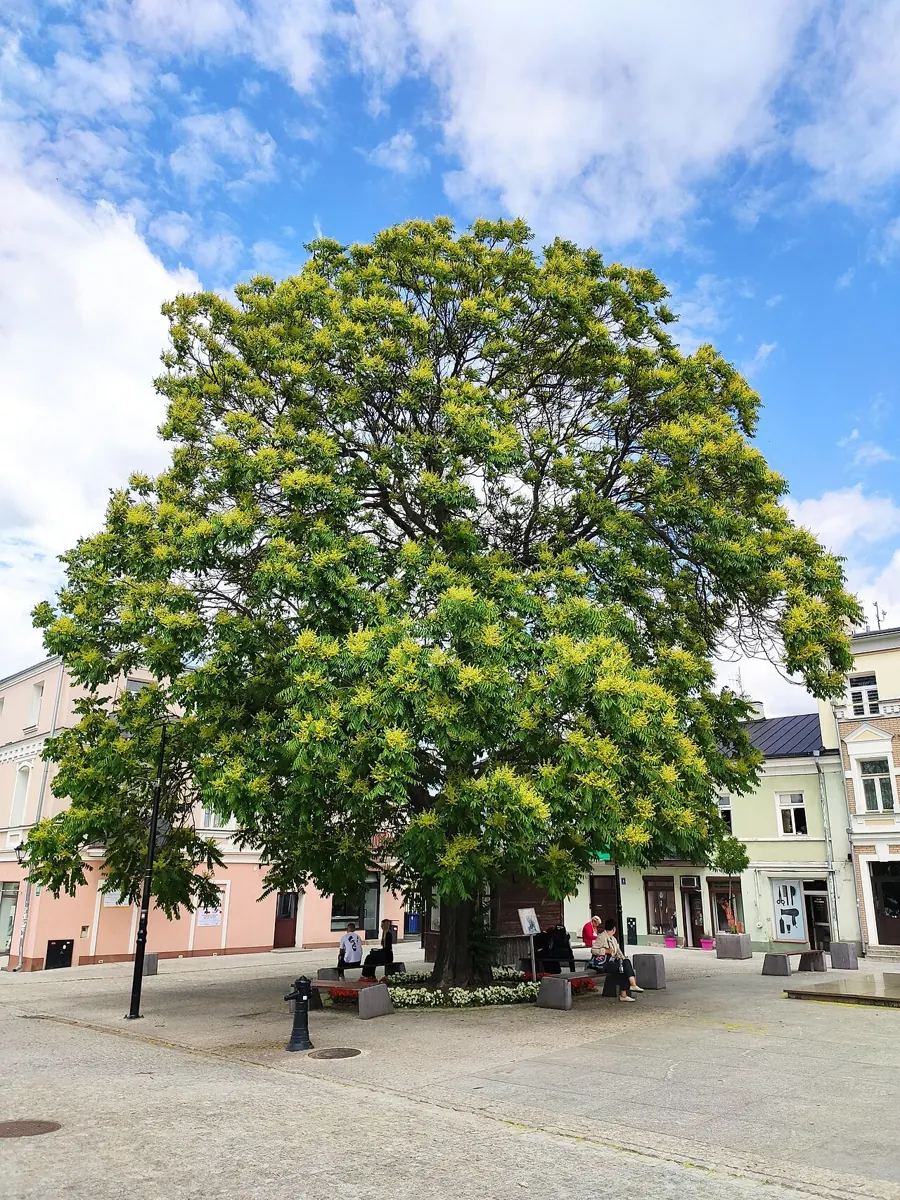
Tree of heaven
Ailanthus altissima
Spanish AilantoCatalan AilantIntroduced10–20 mDeciduous
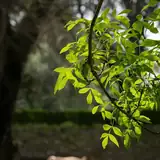
Very long compound leaves, with a couple of teeth at the base of each leaflet and a nasty smell when crushed.
- LeafBroad and flat
- LeafLeaflets in two rows
- ShapeSpear-shaped
- EdgeSmooth
- EdgeToothed
- On the twigOne at a time, staggered
- In winterNo, it loses them
- BarkSmooth
- FruitWinged
The leaf
A very long compound leaf, 40 to 90 cm, with 13 to 25 lance-shaped leaflets. Each leaflet has a smooth edge except for one to four teeth near the base, with a gland underneath. Crushed, it smells bad.
The bark
Grey and smooth, with fine pale streaks. Shallow cracks appear only on very old trunks.
The fruit
Long, twisted samaras with the seed in the middle, in large bunches. They go from green to reddish and then brown, and stay on the tree in winter.
The flower
Small yellowish-green flowers in large sprays. The male ones smell bad. It flowers in May and June.
- Jan
- Feb
- Mar
- Apr
- May
- Jun
- Jul
- Aug
- Sep
- Oct
- Nov
- Dec
Habit
A very fast-growing tree with few, thick branches and an open crown. It resprouts from the roots and forms dense thickets.
Where it grows
It is everywhere in Catalonia: building plots, railway lines, motorways, riverbanks and cracks in the pavement. It is one of the most widespread invasive species.
What it can be mistaken for
The walnut has far fewer leaflets, which are broader and untoothed, and it smells pleasant. The narrow-leaved ash has opposite leaves and leaflets toothed all round the edge.

A story
It came to Europe from China in the 18th century as an ornamental tree. Today it is on Spain's official list of invasive alien species, and planting or selling it is banned.
Find out more
- Tree: Zbigniew Zieliński, CC BY-SA 4.0
- Leaf: Teresa Grau Ros from Barcelona, CC BY-SA 2.0
- Bark: Adrian Tync, CC BY-SA 4.0
- Fruit: Cbaile19, CC0