Trees · Pinaceae
Mountain pine
Pinus uncinata
Spanish Pino negroCatalan Pi negreNative10–20 mEvergreen
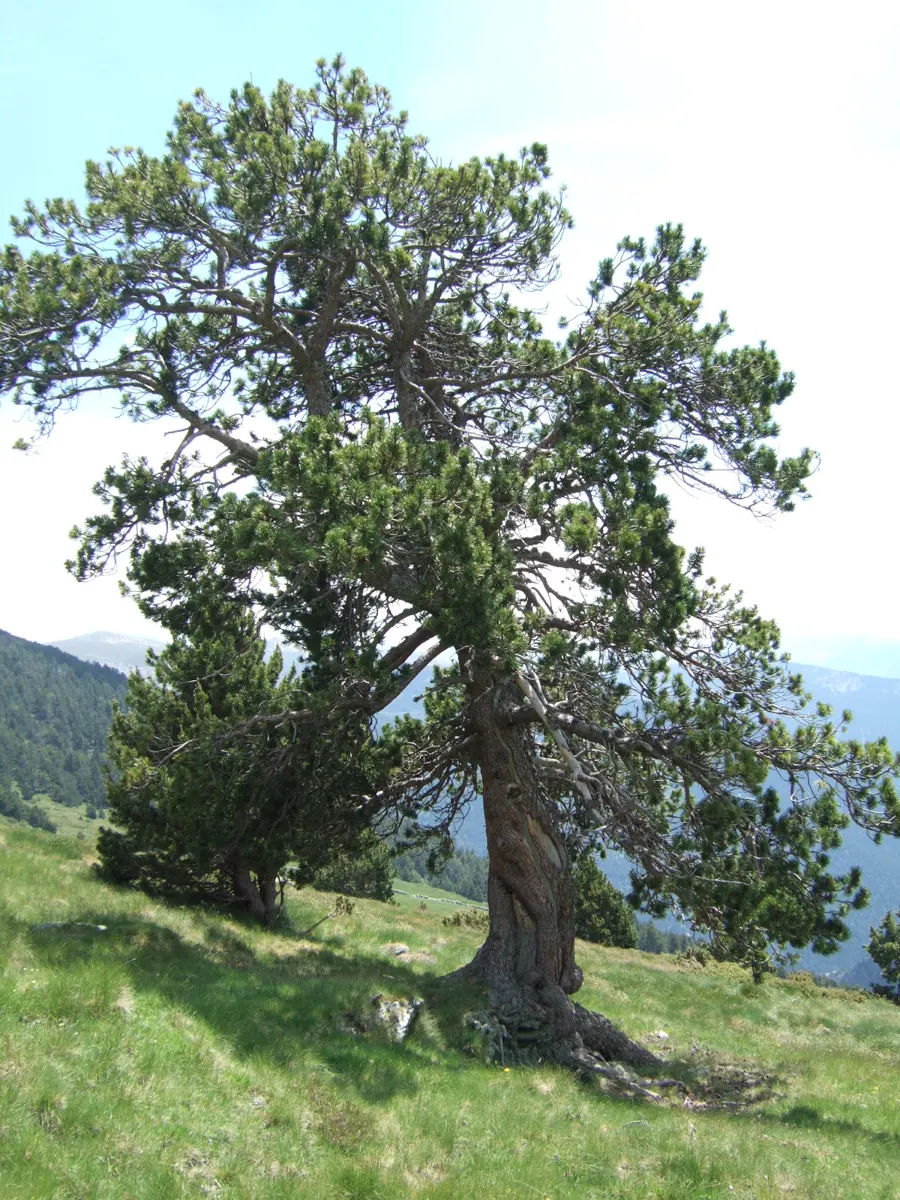
A high-mountain pine, dark and dense, with cones whose scales end in hooks.
- LeafNeedles
- NeedlesIn pairs
- In winterYes, always green
- BarkFlaking in plates
- BarkFurrowed
- FruitCone
The leaf
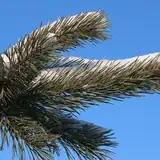
Needles in pairs, short, 3 to 7 cm, stiff and dark green. They are packed tightly on the branches, which look like thick brushes.
The bark
Dark grey, almost black, broken into small square plates. It lacks the orange tones of the Scots pine.
The fruit
Small cones, 3 to 7 cm, lopsided and glossy. The scales on the outward-facing side have a curved, hooked boss, which is what its name uncinata means.
The flower
Yellowish male cones at the base of the shoots and small violet female conelets at the tips. It flowers at the start of summer, high in the mountains.
- Jan
- Feb
- Mar
- Apr
- May
- Jun
- Jul
- Aug
- Sep
- Oct
- Nov
- Dec
Habit
A tree 10 to 20 m tall, with a straight trunk and a narrow, conical crown. In the most exposed places it stays low and twisted by wind and snow.
Where it grows
It grows in the Pyrenees between about 1,600 and 2,400 m, above the Scots pine and the silver fir, right up to the treeline. There are fine stands in Aigüestortes, the Cerdanya, the Pallars and the Ripollès.
What it can be mistaken for
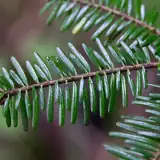
The Scots pine grows lower down and has an orange upper trunk. The silver fir has single, flat needles, not pairs. The mountain pine stands out for its dark bark and hooked cones.
A story
It is the tree that climbs highest in the Pyrenees: it marks where the forest ends and the alpine meadows begin. It withstands cold, wind and poor soils, and some trees on the highest slopes are several centuries old.
Find out more
- Tree: Joan Simon, CC BY-SA 3.0
- Leaf: Joan Simon from Barcelona, España, CC BY-SA 2.0
- Bark: Agnieszka Kwiecień, Nova, CC BY-SA 4.0
- Fruit: Didier Descouens, CC BY-SA 4.0