Trees · Rosaceae
Rowan
Sorbus aucuparia
Spanish Serbal de cazadoresCatalan Moixera de guillaNative5–15 mDeciduous
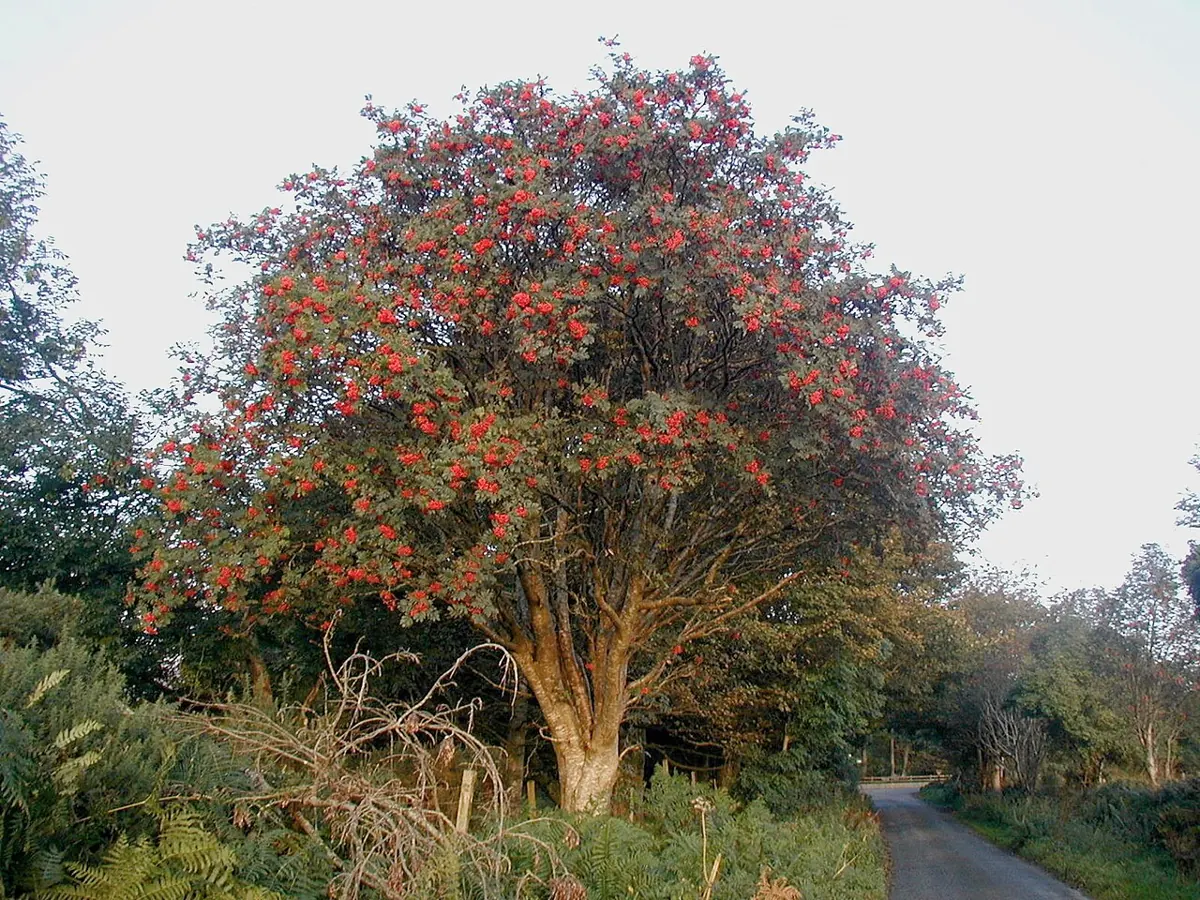
Leaves with many toothed leaflets, and clusters of red or orange berries.
- LeafBroad and flat
- LeafLeaflets in two rows
- ShapeSpear-shaped
- EdgeToothed
- On the twigOne at a time, staggered
- In winterNo, it loses them
- BarkSmooth
- FruitFleshy
The leaf
Each leaf has nine to fifteen narrow, elongated leaflets with toothed edges. The leaves are alternate on the twig. In autumn they turn yellow, orange or red.
The bark
The bark is grey, smooth and slightly shiny, with horizontal marks. Only on very old trees does it crack a little.
The fruit
It bears dense clusters of round fruits less than a centimetre across, bright orange or red, which ripen in late summer. They are very sour raw and birds love them.
The flower
In spring it produces flat clusters of small white flowers with a strong smell.
- Jan
- Feb
- Mar
- Apr
- May
- Jun
- Jul
- Aug
- Sep
- Oct
- Nov
- Dec
Habit
A small, light tree with a rounded, open crown. It often grows among rocks or in woodland clearings.
Where it grows
It is a mountain tree. In Catalonia you will find it in the Pyrenees, the Pre-Pyrenees and the Montseny, in mountain pine, beech and fir woods and in clearings.
What it can be mistaken for
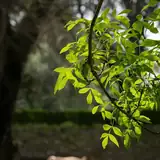
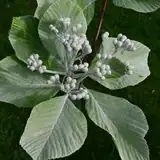
The narrow-leaved ash has similar compound leaves, but they grow in opposite pairs and its fruits are dry samaras. The whitebeam belongs to the same family and has similar red fruits, but its leaf is simple and white underneath.
A story
Its Spanish name, serbal de cazadores ('hunters' rowan'), and its scientific name aucuparia both come from bird-catching: its berries were used as bait to trap thrushes and other birds.
Find out more
- Tree: Eeno11, CC BY-SA 3.0
- Leaf: Dmitry Makeev, CC BY-SA 4.0
- Bark: Nadiatalent, CC BY-SA 3.0
- Fruit: Luis Miguel Bugallo Sánchez, CC BY-SA 4.0