Trees · Cupressaceae
Spanish juniper
Juniperus thurifera
Spanish Sabina albarCatalan Savina turíferaNative6–15 mEvergreen
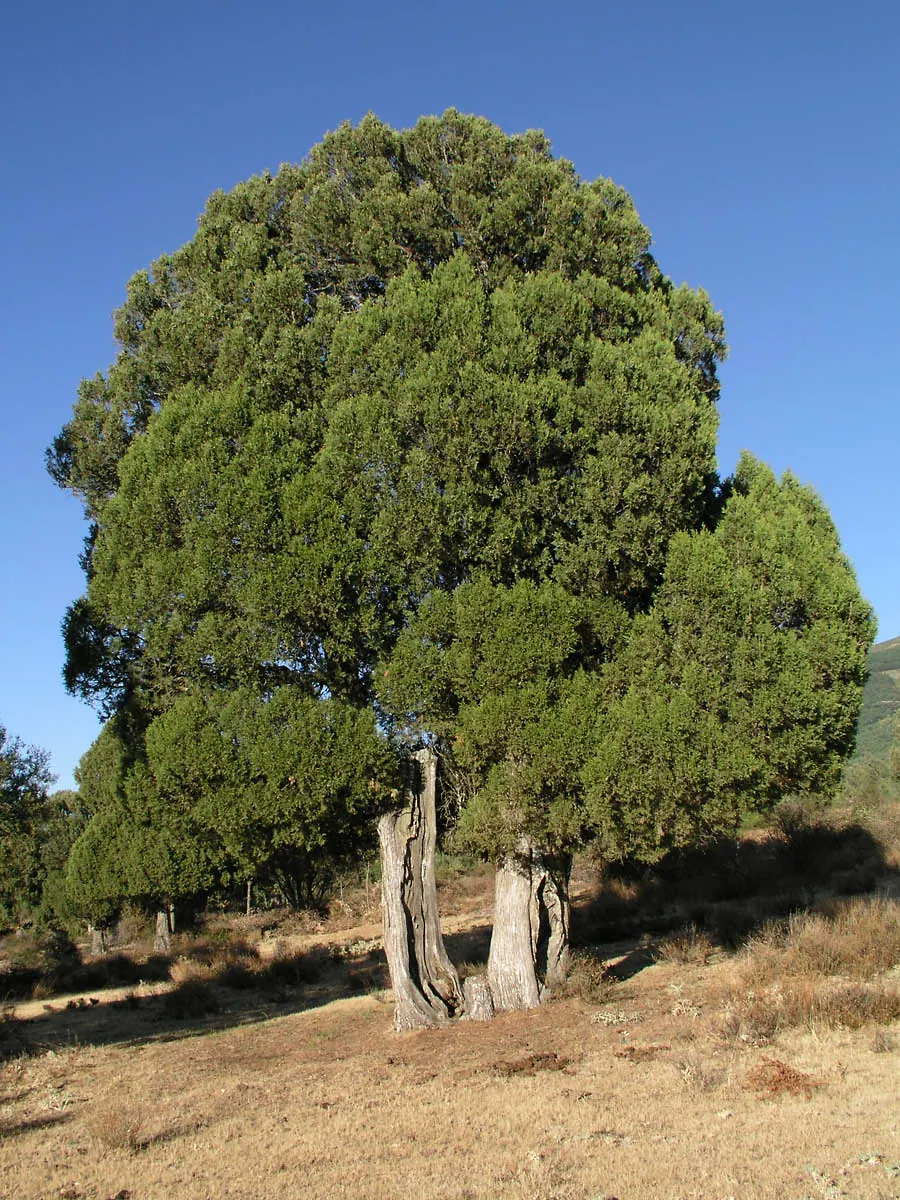
A squat, dark tree of high, bare plateaus, with scale leaves and blue-black berries.
- LeafScales
- In winterYes, always green
- BarkIn strips
- FruitSmall scaly ball
The leaf
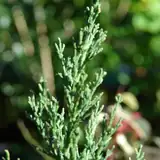
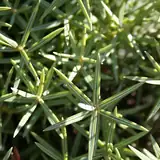
Adult trees have scale leaves, tiny and pressed against the twigs, dark green and resinous-smelling. Young trees also bear short, sharp needles.
The bark
Greyish brown and fibrous, peeling in long strips. The trunk is usually thick, short and twisted.
The fruit
Round, fleshy berries 7 to 12 mm across, blue-black or purple and covered in a whitish bloom. They take two years to ripen.
The flower
Small, inconspicuous flowers; in late winter the male trees are covered in little yellow cones that release plenty of pollen.
- Jan
- Feb
- Mar
- Apr
- May
- Jun
- Jul
- Aug
- Sep
- Oct
- Nov
- Dec
Habit
A tree 6 to 15 m tall, with a thick trunk and a broad, dense, rounded crown; pyramidal when young. The trees usually grow well apart, forming open woodland.
Where it grows
It lives on the high, cold, dry uplands of inland Spain, especially in Soria, Guadalajara, Teruel and León. In Catalonia it is very scarce.
What it can be mistaken for
The Italian cypress also has scale leaves, but its fruit is woody and grey. The prickly juniper has only needles in threes and reddish berries. The Spanish juniper is recognised by its scales and its dark berries dusted with white bloom.
A story
Its name, thurifera, means incense-bearing, after its fragrant wood, which has been burnt as incense. That wood lasts a long time without rotting and was used for beams and posts. Some of these junipers are several centuries old.
Find out more
- Tree: Autor desconocido, CC BY-SA 2.1 es
- Leaf: Consultaplantas, CC BY-SA 4.0
- Bark: Rowanwindwhistler, CC BY-SA 3.0
- Fruit: SABENCIA Guillermo César Ruiz, CC BY-SA 4.0