Trees · Cupressaceae
Italian cypress
Cupressus sempervirens
Spanish CiprésCatalan XiprerIntroduced15–30 mEvergreen
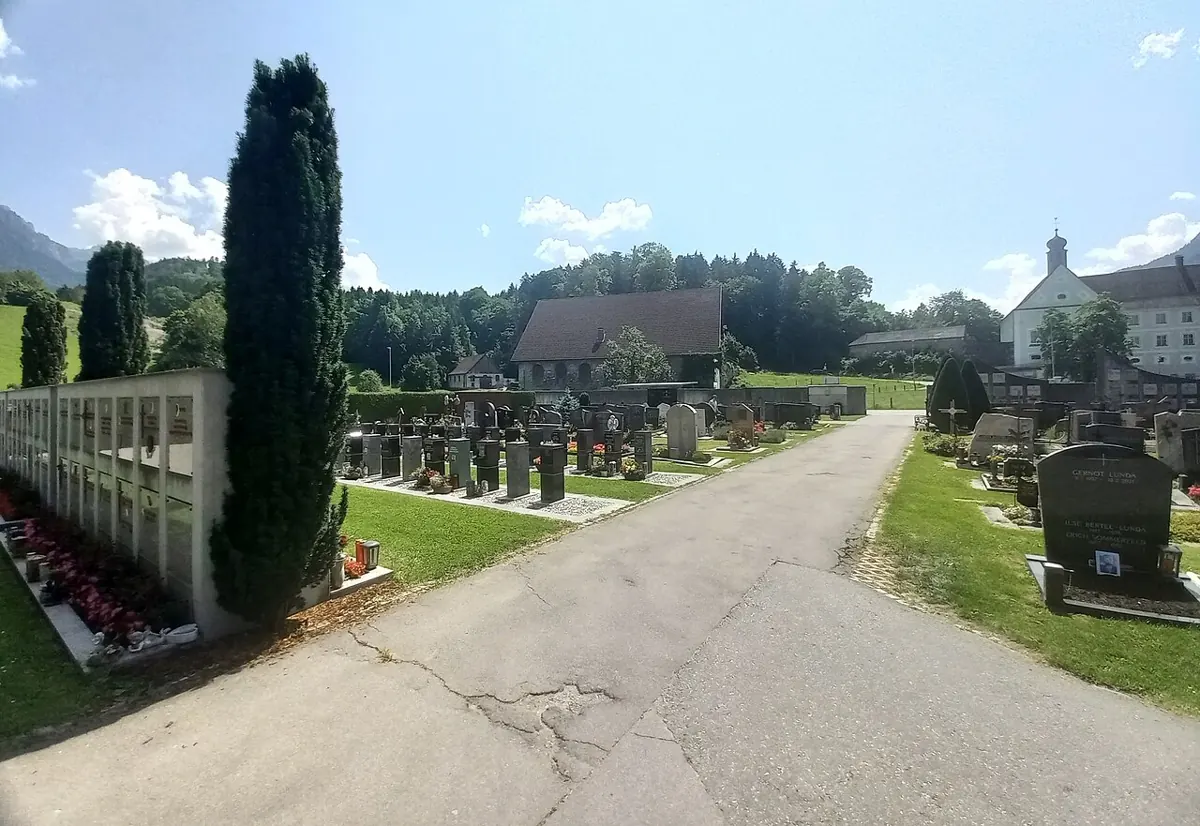
A narrow, tall tree shaped like a flame, dark green, with small grey woody balls.
- LeafScales
- In winterYes, always green
- BarkIn strips
- FruitSmall scaly ball
The leaf
Tiny scale leaves, 1 mm long, pressed against the twigs in opposite pairs. The twigs look like dark green cords and smell of resin when rubbed.
The bark
Thin and greyish brown, with shallow furrows that divide it into long, peeling strips.
The fruit
Rounded cones 2 to 4 cm across, made of 8 to 14 woody scales, each with a small point in the centre. They are green, then grey, and take two years to open.
The flower
The male flowers are tiny yellowish cones at the twig tips that shed pollen in late winter. The female ones are small greenish balls.
- Jan
- Feb
- Mar
- Apr
- May
- Jun
- Jul
- Aug
- Sep
- Oct
- Nov
- Dec
Habit
The most widely planted form is columnar, very narrow and tall, 15 to 30 m. There is also a form with open, horizontal branches, which is the wild one.
Where it grows
It came from the eastern Mediterranean thousands of years ago. In Catalonia it stands in cemeteries, by farmhouses and hermitages, in gardens, and as a windbreak around fields.
What it can be mistaken for
The Spanish juniper also has scale leaves, but its fruit is a fleshy, blue-black berry. The prickly juniper has prickly needles. The flame shape and grey woody balls belong to the cypress.
A story
It is said that a cypress beside a farmhouse told travellers they would be given water there; two meant they could eat, and three that they could stay the night. Its long-lasting wood and evergreen foliage have tied it to eternity and to cemeteries since ancient times.
Find out more
- Tree: Asurnipal, CC BY-SA 4.0
- Leaf: Forest & Kim Starr, CC BY 3.0
- Bark: Spiritia, CC BY-SA 4.0
- Fruit: Liné1, CC BY-SA 3.0