Trees · Cupressaceae
Prickly juniper
Juniperus oxycedrus
Spanish EnebroCatalan CàdecNative2–8 mEvergreen
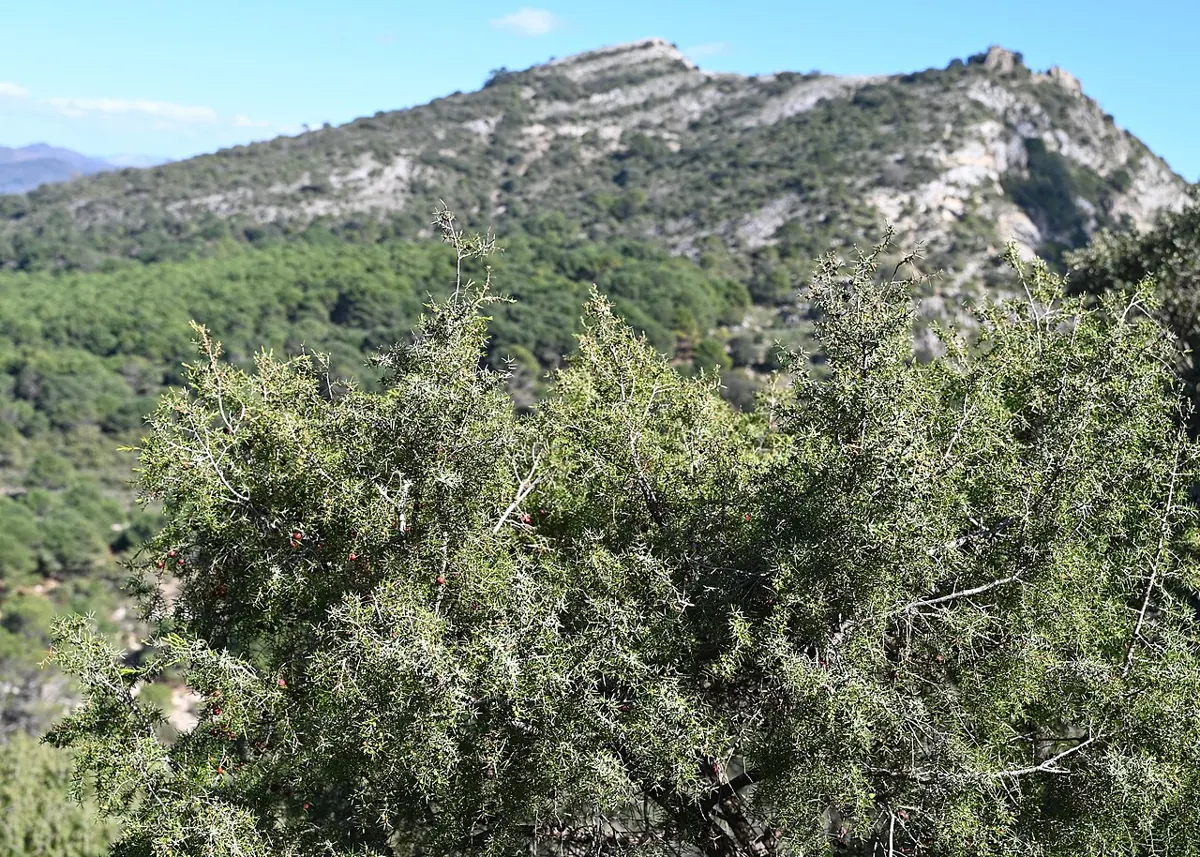
A shrub or small tree with sharp needles in threes and small reddish berries.
- LeafNeedles
- NeedlesOne by one
- In winterYes, always green
- BarkIn strips
- FruitSmall scaly ball
The leaf
Stiff, very sharp needles, 1 to 2.5 cm, growing in whorls of three at the same level. Above, they have two whitish stripes separated by a green midrib.
The bark
Greyish brown and fibrous, coming away in long, thin strips.
The fruit
Round, fleshy berries 8 to 15 mm across that turn from green to a glossy reddish brown when ripe. They take about two years to mature.
The flower
Very small, inconspicuous flowers; there are male plants, with little yellow cones that shed pollen in late winter, and female plants.
- Jan
- Feb
- Mar
- Apr
- May
- Jun
- Jul
- Aug
- Sep
- Oct
- Nov
- Dec
Habit
Usually a shrub 2 to 4 m tall, though it can become a small tree up to 8 m, with a conical or irregular crown.
Where it grows
It is very common in dry pine woods, garrigue and open holm oak woods across most of Catalonia, on poor, sunny soils.
What it can be mistaken for
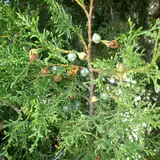
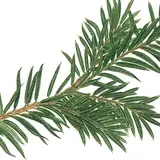
The Spanish juniper has scale leaves and blue-black fruit. The yew has soft, flat needles with no white stripes. Common juniper (Juniperus communis), a mountain plant, looks very similar but has a single white stripe on each needle and blue-black berries.
A story
Distilling its wood gives cade oil, oli de càdec in Catalan, with a strong tarry smell, once used to treat mange in livestock and in skin soaps.
Find out more
- Tree: Krzysztof Ziarnek, Kenraiz, CC BY-SA 4.0
- Leaf: Juan Carlos, CC BY-SA 2.0
- Bark: Luis Fernández García, CC BY-SA 3.0
- Fruit: Luis Fernández García, CC BY-SA 4.0