Trees · Moraceae
White mulberry
Morus alba
Spanish MoreraCatalan MoreraIntroduced6–15 mDeciduous
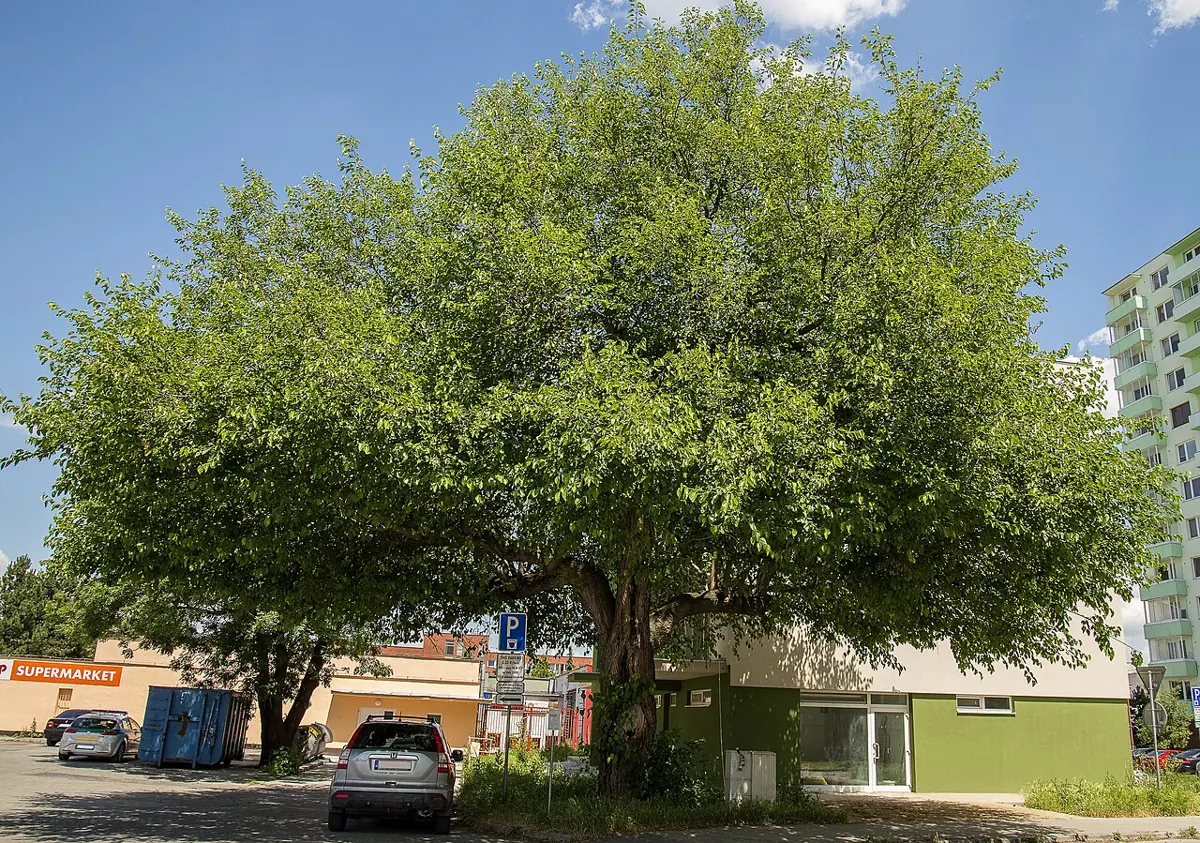
Glossy, toothed leaves, some whole and some lobed on the same tree, and a crown often pollarded into a ball.
- LeafBroad and flat
- LeafYes, a single blade
- ShapeHeart-shaped
- ShapeOval
- ShapeLobed
- EdgeToothed
- EdgeWavy or lobed
- On the twigOne at a time, staggered
- In winterNo, it loses them
- BarkFurrowed
- FruitFleshy
The leaf
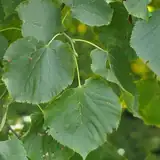
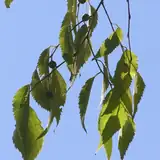
A simple leaf with a slightly heart-shaped base and toothed edge, smooth and glossy. Whole leaves and leaves with two or three irregular lobes grow side by side on the same tree, especially on young shoots.
The bark
Greyish brown, with shallow cracks that show a hint of orange at the bottom.
The fruit
The mulberry is a fleshy cluster like a blackberry, white, pink or purple depending on the variety. It ripens in late spring.
The flower
Small greenish flowers gathered in short catkins. They go almost unnoticed.
- Jan
- Feb
- Mar
- Apr
- May
- Jun
- Jul
- Aug
- Sep
- Oct
- Nov
- Dec
Habit
A medium-sized tree with a broad, rounded crown. In squares and streets it is usually cut back every year, leaving a short trunk topped with knuckles.
Where it grows
Widely planted in the squares, promenades and school playgrounds of Catalan towns for its shade. In cities, fruitless varieties that don't mess up the pavement are common.
What it can be mistaken for
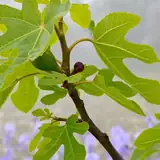
The leaf recalls the large-leaved lime, which is paler underneath with a more lopsided base, and the nettle tree, which is narrower and more pointed, with three prominent veins. The lobed leaves might make you think of a fig, but they are thin and glossy, not rough.
A story
Its leaves are the food of silkworms, which is why it was planted all round the Mediterranean when silk was a big industry. Plenty of children still look for them every spring to raise silkworms in a shoebox.
Find out more
- Tree: Alena Hroncová, CC BY-SA 4.0
- Leaf: Bonnjalal00, CC BY-SA 4.0
- Bark: Famartin, CC BY-SA 4.0
- Fruit: Forest and Kim Starr, CC BY 3.0 us