Trees · Salicaceae
White poplar
Populus alba
Spanish Álamo blancoCatalan ÀlberNative15–30 mDeciduous
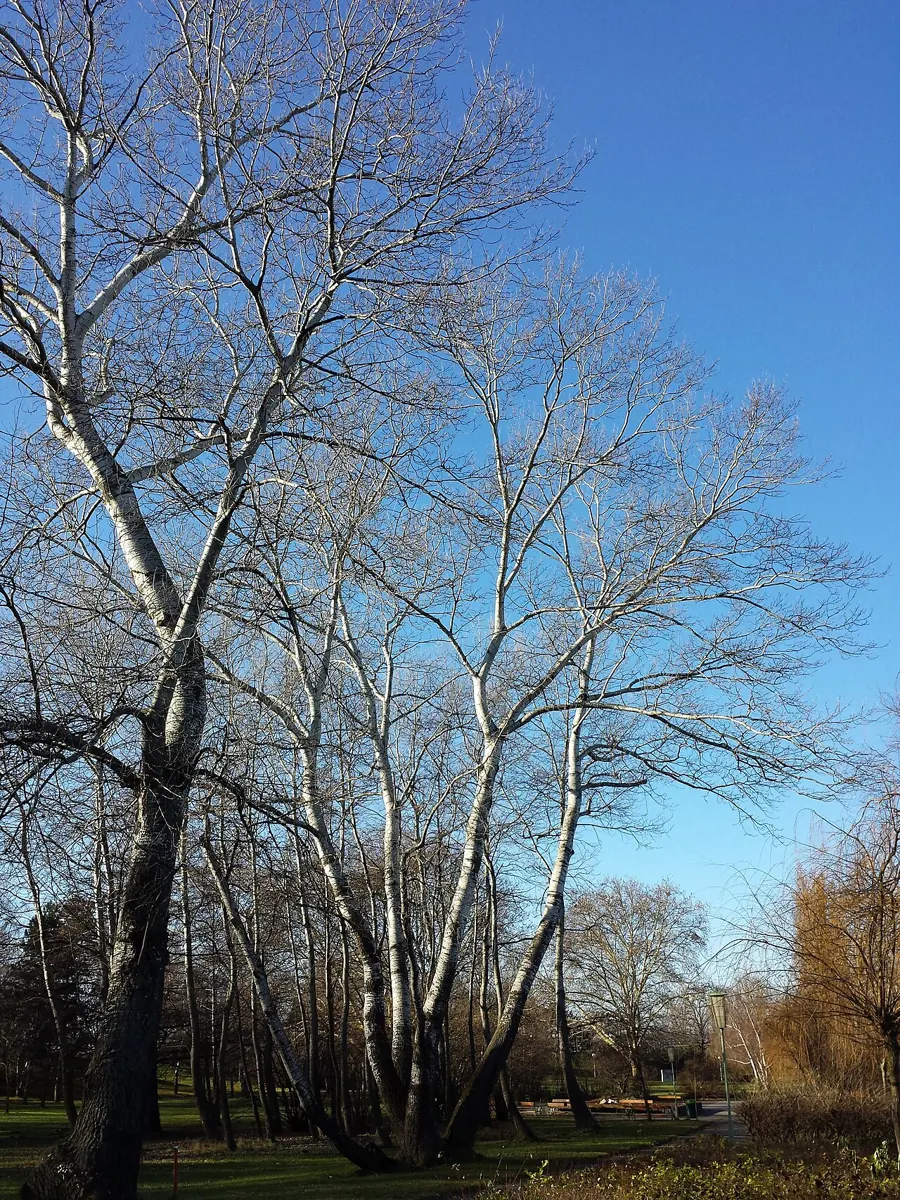
Leaves green on top and cotton-white underneath, and a whitish trunk.
- LeafBroad and flat
- LeafYes, a single blade
- ShapeLike a hand
- ShapeOval
- EdgeWavy or lobed
- EdgeToothed
- On the twigOne at a time, staggered
- In winterNo, it loses them
- BarkWhite
- BarkFurrowed
- FruitCapsule that splits open
The leaf
The underside of the leaf is covered in thick white felt, and in the wind the whole tree seems to change colour. On long shoots the leaves have three to five lobes, like a hand; on short twigs they are smaller, oval and irregularly toothed.
The bark
The bark is white or very pale grey, with dark diamond-shaped marks. At the base of old trunks it turns dark and cracks.
The fruit
It bears small capsules grouped in hanging catkins. When they ripen in spring they split open and release seeds with white fluff, like those of the black poplar.
The flower
It flowers in late winter, before the leaves come out, in hanging catkins. Male and female flowers grow on separate trees.
- Jan
- Feb
- Mar
- Apr
- May
- Jun
- Jul
- Aug
- Sep
- Oct
- Nov
- Dec
Habit
A large tree with a broad crown and pale branches. It sends up many suckers from its roots, so it often forms groves that are really all the same individual.
Where it grows
It grows beside rivers, irrigation ditches and damp hollows all over Catalonia, especially in the lowlands. It has also been widely planted along avenues, in parks and beside roads.
What it can be mistaken for
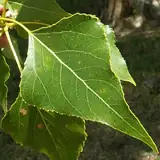
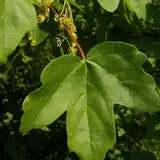
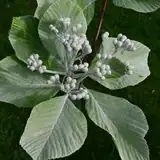
The black poplar has leaves that are green on both sides and dark, furrowed bark. The field maple also has lobed leaves, but they grow in opposite pairs and are not white underneath. The whitebeam has white undersides, but its leaves are not lobed and its fruit is a red berry.
A story
The Spanish word alameda, a tree-lined avenue, comes from álamo, poplar: it was the promenade lined with poplars that many towns and cities had. In Catalan the white poplar is called àlber, and an albereda is a white poplar wood.
Find out more
- Tree: Stefan.lefnaer, CC BY-SA 3.0
- Leaf: SABENCIA Bertu Ordiales, CC BY-SA 4.0
- Bark: MurielBendel, CC BY-SA 4.0
- Fruit: Димитър Найденов / Dimìtar Nàydenov, CC BY-SA 4.0