Trees · Juglandaceae
Walnut
Juglans regia
Spanish NogalCatalan NogueraIntroduced10–25 mDeciduous
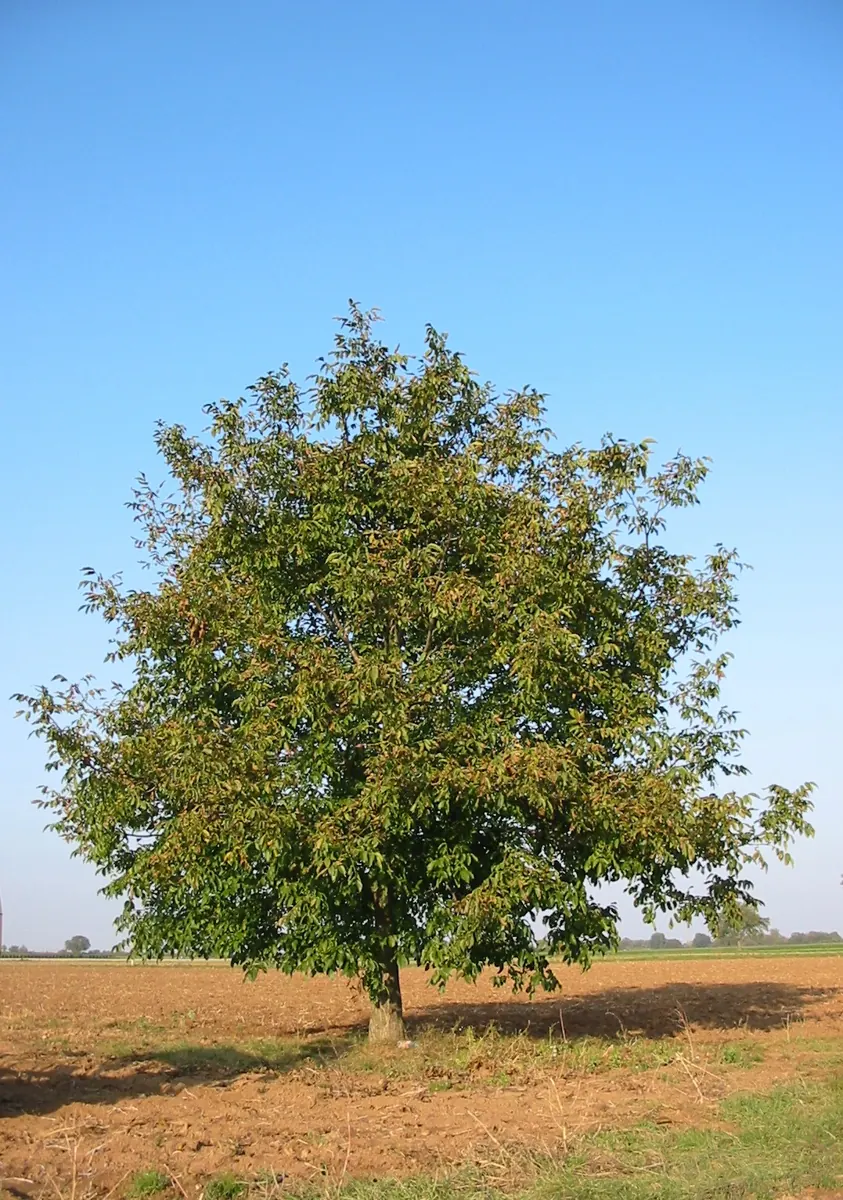
A big tree with a broad crown and compound leaves of a few large leaflets that smell strongly when rubbed.
- LeafBroad and flat
- LeafLeaflets in two rows
- ShapeOval
- EdgeSmooth
- On the twigOne at a time, staggered
- In winterNo, it loses them
- BarkSmooth
- BarkFurrowed
- FruitNut
The leaf
A compound leaf of five to nine oval leaflets with smooth edges, the one at the tip larger than the rest. Crushed, it gives off a strong, distinctive smell.
The bark
Pale grey and smooth on young trees. On old ones it opens into deep fissures that form long ridges.
The fruit
The walnut comes wrapped in a green, fleshy husk that turns black and splits open as it ripens, in late summer and autumn.
The flower
The male flowers hang in thick green catkins; the female ones are small, at the tips of the shoots. It flowers in April and May, with the new leaves.
- Jan
- Feb
- Mar
- Apr
- May
- Jun
- Jul
- Aug
- Sep
- Oct
- Nov
- Dec
Habit
A sturdy tree with a thick trunk and a wide, rounded crown, with heavy, twisting branches.
Where it grows
It is planted next to farmhouses, kitchen gardens and valley bottoms with moist soil, especially inland and in the mountains. It often runs wild along rivers and irrigation channels.
What it can be mistaken for
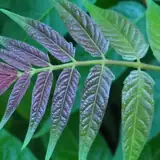
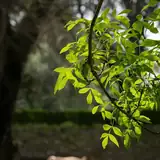
The tree of heaven also has compound leaves, but with many more leaflets, which are pointed and have a few teeth near the base. The narrow-leaved ash has opposite leaves and toothed leaflets.
A story
The green husk stains your hands brown for days; it was used to make walnut stain for wood. In Catalonia green walnuts, picked around Midsummer (Sant Joan, 24 June), are the main ingredient of ratafia, a herbal liqueur.
Find out more
- Tree: Georg Slickers, CC BY-SA 4.0
- Leaf: George Chernilevsky, Public domain
- Bark: Pieter Delicaat, CC BY-SA 4.0
- Fruit: Böhringer Friedrich, CC BY-SA 2.5