Trees · Fabaceae
Silver wattle
Acacia dealbata
Spanish MimosaCatalan MimosaIntroduced5–15 mEvergreen
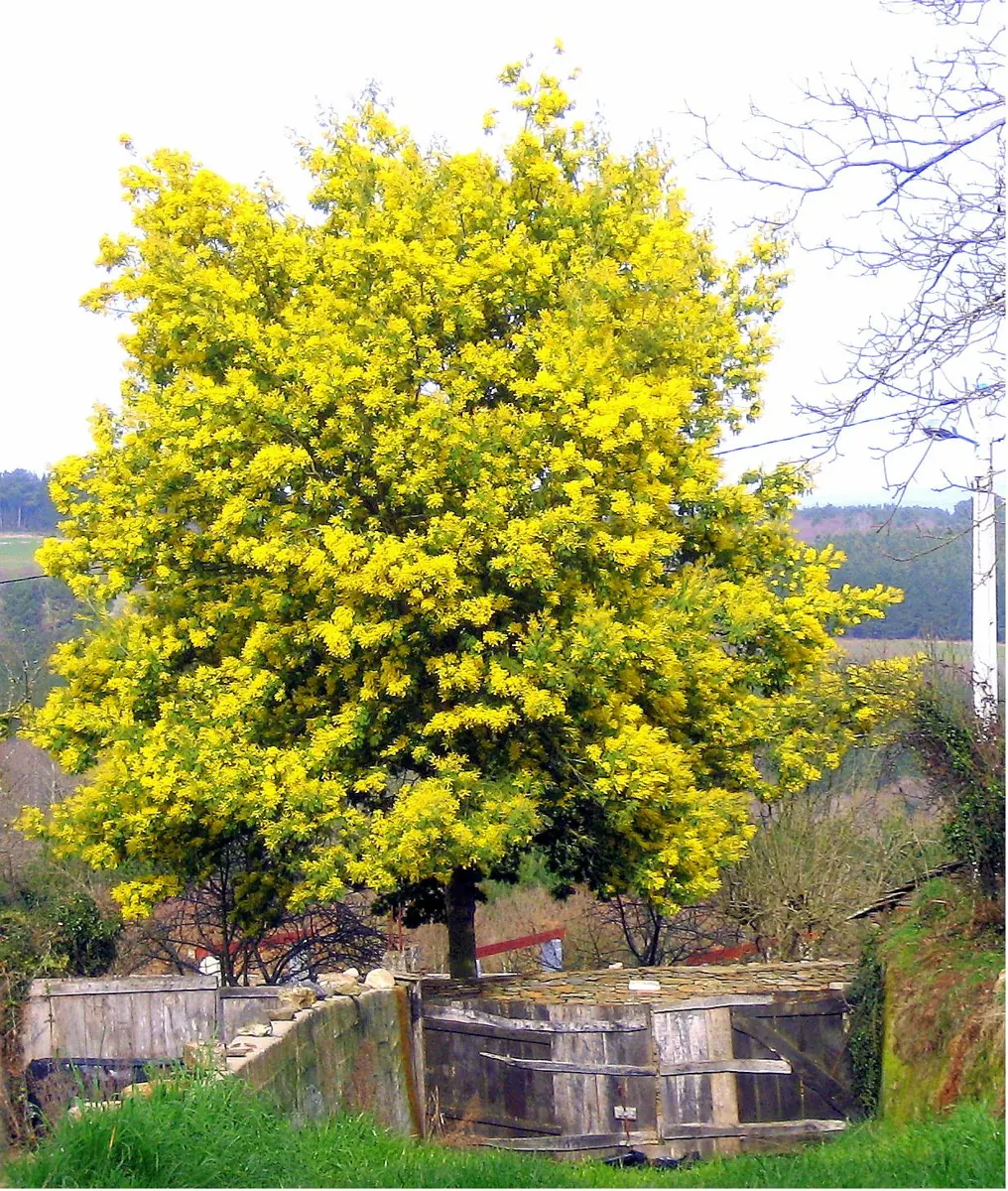
In the depths of winter it is covered in fragrant yellow pompoms; fine, feathery leaves of silvery grey.
- LeafBroad and flat
- LeafLeaflets made of leaflets
- ShapeLong and narrow
- EdgeSmooth
- On the twigOne at a time, staggered
- In winterYes, always green
- BarkSmooth
- BarkFurrowed
- FruitPod
The leaf
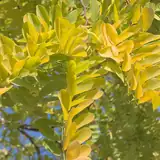
A leaf divided twice into hundreds of tiny, narrow leaflets, greyish or silvery green. It looks like a feather or a fern.
The bark
Greenish grey and smooth on young trunks; on old ones it darkens and cracks.
The fruit
Flat, narrow pods, bluish brown, 5 to 10 cm long.
The flower
Fluffy, very fragrant yellow balls in large clusters. It flowers from January to March.
- Jan
- Feb
- Mar
- Apr
- May
- Jun
- Jul
- Aug
- Sep
- Oct
- Nov
- Dec
Habit
A small or medium-sized, fast-growing tree with an irregular crown, which sends up suckers from the roots.
Where it grows
It is planted in gardens and parks throughout Catalonia. It comes from south-eastern Australia and runs wild on acid soils; in Galicia it is a widespread invasive.
What it can be mistaken for
The honey locust has larger, oval leaflets and is deciduous. The jacaranda has similar leaves, but green and opposite, and blue flowers in spring.

A story
In Italy it is the custom to give women sprigs of mimosa on 8 March, International Women's Day. On the French Riviera there are mimosa festivals in February.
Find out more
- Tree: original photo: Certo Xornal from Ribeira, Galicia, España derivative work: Berichard, CC BY 2.0
- Leaf: JHenryW, CC0
- Bark: John Tann from Sydney, Australia, CC BY 2.0
- Fruit: Alberto Salguero, CC BY-SA 3.0
- Flower: Balles2601, CC BY-SA 4.0