Trees · Meliaceae
Chinaberry
Melia azedarach
Spanish MeliaCatalan MèliaIntroduced6–12 mDeciduous
Clusters of little yellow berries hanging from the bare branches all winter.
- LeafBroad and flat
- LeafLeaflets made of leaflets
- ShapeOval
- ShapeSpear-shaped
- EdgeToothed
- On the twigOne at a time, staggered
- In winterNo, it loses them
- BarkFurrowed
- BarkSmooth
- FruitFleshy
The leaf
A large leaf, divided twice, with many oval or lance-shaped leaflets with toothed edges. It is bright green and has a slight smell when crushed.
The bark
Smooth and reddish brown on young trees; on mature ones it opens into long fissures.
The fruit
Fleshy little balls 1 to 1.5 cm across, green and then yellow, in clusters. They stay on the tree after the leaves have fallen. They are poisonous to people.
The flower
Small lilac, star-shaped flowers with five petals, in loose, very fragrant clusters. It flowers in spring.
- Jan
- Feb
- Mar
- Apr
- May
- Jun
- Jul
- Aug
- Sep
- Oct
- Nov
- Dec
Habit
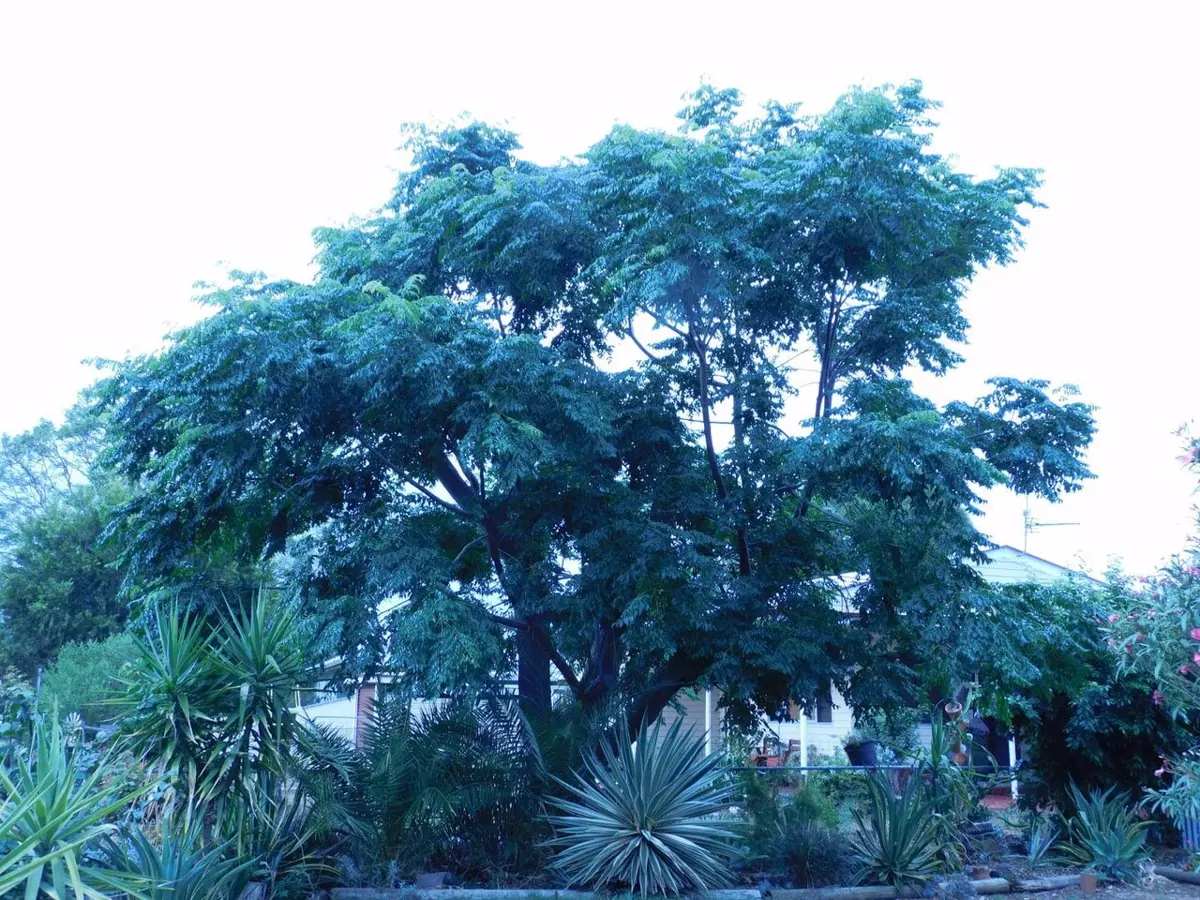
A small or medium-sized tree with a rounded, fairly open crown.
Where it grows
Planted in streets and squares in many Catalan towns, especially near the coast. It comes from Asia and copes well with drought and heat.
What it can be mistaken for
The jacaranda also has twice-divided leaves, but much finer, like a fern, and opposite. The tree of heaven has leaves divided only once and winged fruit.


A story
Its stones, hard and with a hole through the middle, were strung together to make rosaries, which is where its Catalan name comes from: arbre dels paternòsters, the "Our Father tree".
Find out more
- Tree: Majestic Lin, CC BY-SA 4.0
- Leaf: JonRichfield, CC BY-SA 4.0
- Bark: Philmarin, CC BY-SA 4.0
- Fruit: Forest and Kim Starr, CC BY 3.0 us
- Flower: Forest and Kim Starr, CC BY 3.0 us