Trees · Fabaceae
Japanese pagoda tree
Styphnolobium japonicum
Spanish SóforaCatalan SòforaIntroduced10–20 mDeciduous
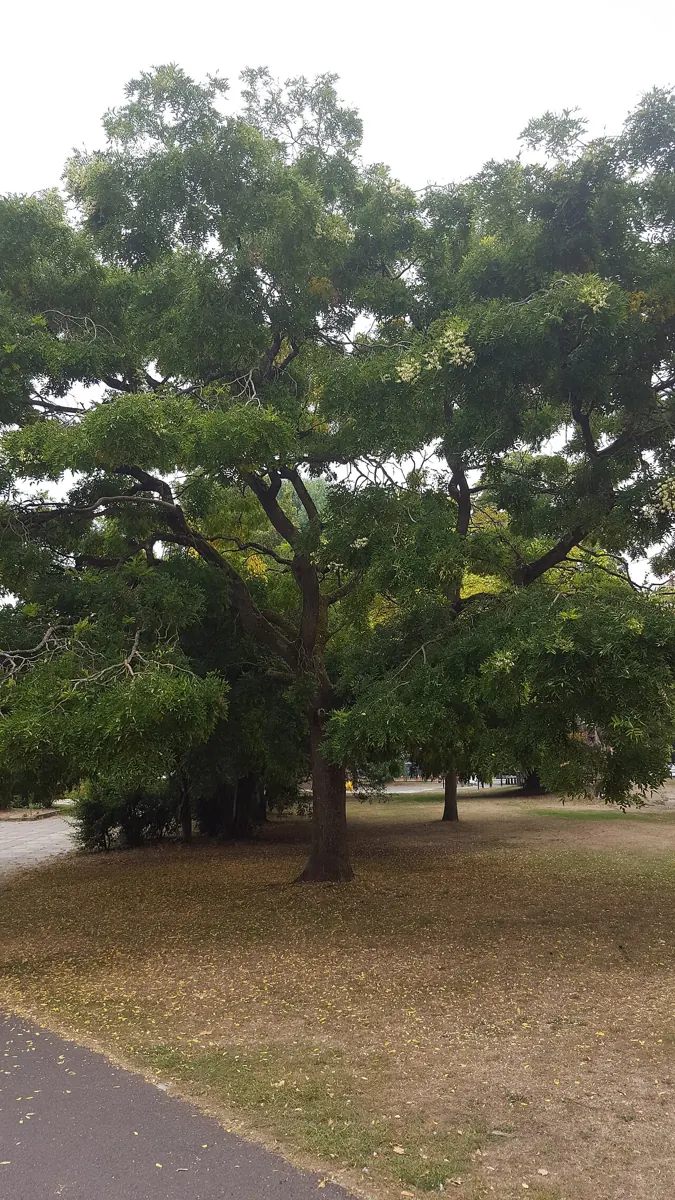
It flowers in high summer with creamy white clusters, and its pods look like necklaces of green beads.
- LeafBroad and flat
- LeafLeaflets in two rows
- ShapeOval
- ShapeSpear-shaped
- EdgeSmooth
- On the twigOne at a time, staggered
- In winterNo, it loses them
- BarkFurrowed
- FruitPod
The leaf
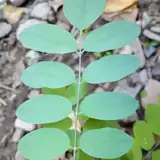
A compound leaf of 7 to 17 oval leaflets ending in a point, smooth-edged, dark green and glossy on top. It has no spines.
The bark
Greyish brown, with lengthwise fissures that form criss-crossing ridges. The young twigs are green.
The fruit
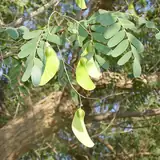
Fleshy pods, pinched in between the seeds like a string of beads. They are green, then yellowish, and stay on the tree in winter.
The flower
Small, creamy white flowers in large upright clusters at the ends of the branches. It flowers from July to September and leaves the pavement strewn with petals.
- Jan
- Feb
- Mar
- Apr
- May
- Jun
- Jul
- Aug
- Sep
- Oct
- Nov
- Dec
Habit
A medium-sized tree with a rounded, broad, even crown.
Where it grows
Widely planted in the streets of Barcelona and other Catalan towns because it tolerates pollution well. It comes from China, despite the name linking it to Japan.
What it can be mistaken for
The black locust has round-tipped leaflets, spines on the branches and flowers in spring. The tipu tree has yellow flowers and winged fruit.
A story
In China and Japan it was planted next to Buddhist temples, hence its English name. Its dried flowers are used to dye silk yellow.
Find out more
- Tree: Richard Avery, CC BY-SA 4.0
- Leaf: Jebulon, CC BY-SA 3.0
- Bark: MONGO, Public domain
- Fruit: Agnieszka Kwiecień, Nova, CC BY-SA 4.0