Trees · Salicaceae
Black poplar
Populus nigra
Spanish ChopoCatalan PollancreNative20–30 mDeciduous
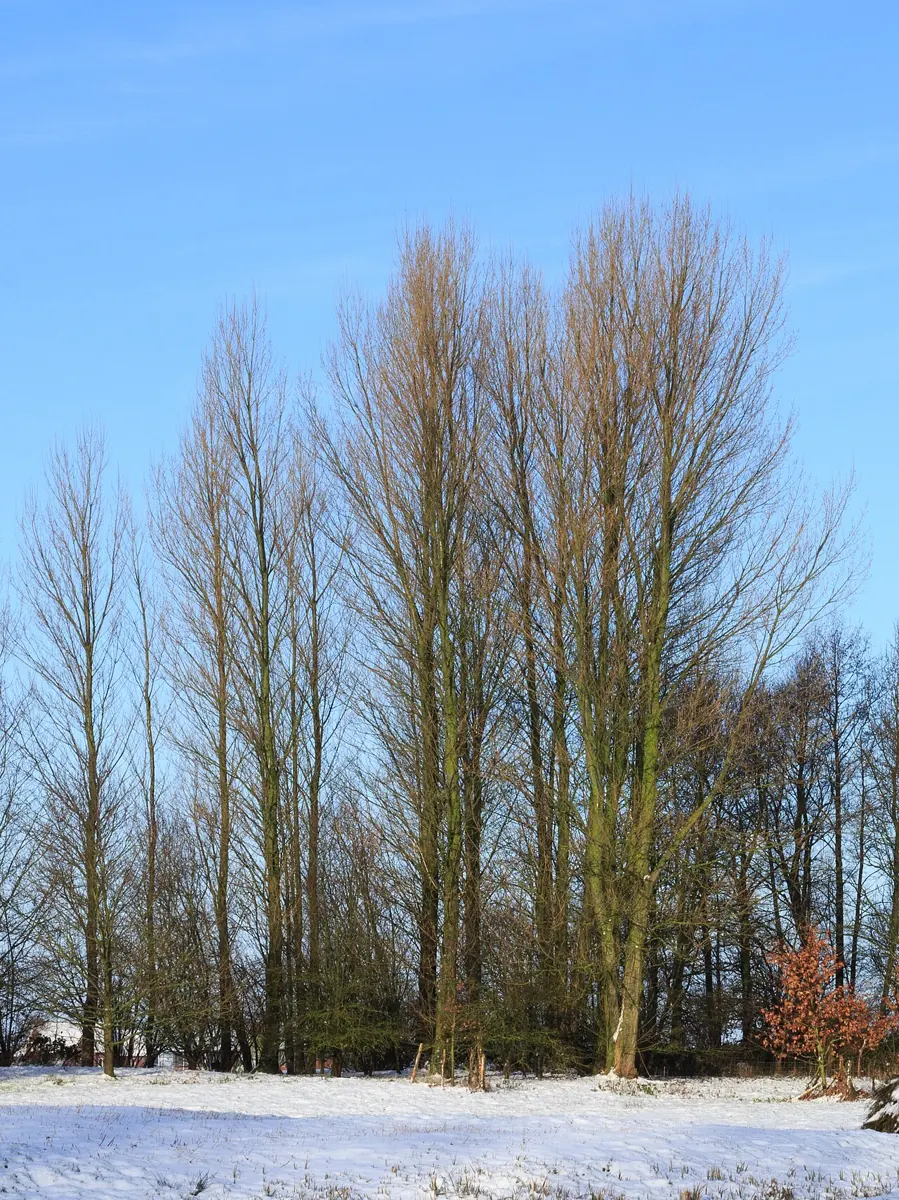
A tall riverside tree with triangular leaves that tremble in the wind.
- LeafBroad and flat
- LeafYes, a single blade
- ShapeTriangular
- EdgeToothed
- On the twigOne at a time, staggered
- In winterNo, it loses them
- BarkFurrowed
- FruitCapsule that splits open
The leaf
The leaf is almost triangular, broad at the base and drawn out to a point, with the edge lined with small rounded teeth. It is glossy green on both sides, hairless, and hangs from a long, flattened stalk, which is why it flutters in the slightest breeze. It turns yellow in autumn.
The bark
On young trees the trunk is smooth and greyish. With age it darkens and splits into deep, almost black vertical furrows, and the base becomes covered in burrs and suckers.
The fruit
The fruits are small green capsules hanging in long strings, like necklaces. In late spring they split open and release seeds wrapped in white fluff, which the wind carries far away and which piles up on the ground like snow.
The flower
It flowers before the leaves come out, in hanging catkins. There are male trees, with reddish catkins, and female trees, with greenish catkins that go on to form the fruit.
- Jan
- Feb
- Mar
- Apr
- May
- Jun
- Jul
- Aug
- Sep
- Oct
- Nov
- Dec
Habit
A large tree with a straight trunk and a broad, irregular crown. A widely planted variety, the Lombardy poplar, holds all its branches tight against the trunk, forming a narrow column that you can spot from far away in rows along roads and fields.
Where it grows
It grows along the banks of rivers and streams and in soils with water close by, all over Catalonia. Many poplar plantations grown for timber are actually hybrid poplars, which look very much like this one.
What it can be mistaken for
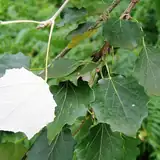
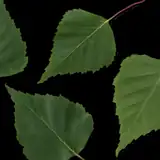
The white poplar has leaves that are white and cottony underneath and whitish bark with diamond-shaped marks. The silver birch also has triangular leaves, but they are smaller and double-toothed, and its trunk is white. Black poplar leaves are smooth and the same green on both sides.
A story
Poplar wood is soft and light and grows fast, so poplar plantations have been planted to make fruit crates, pallets and plywood. The fluff from the seeds, which many people blame on the poplar, rarely causes allergies; the pollen that bothers people at that time of year is usually from grasses.
Find out more
- Tree: Dominicus Johannes Bergsma, CC BY-SA 4.0
- Leaf: Krzysztof Ziarnek, Kenraiz, CC BY-SA 4.0
- Bark: Димитър Найденов / Dimìtar Nàydenov, CC BY-SA 3.0
- Fruit: SABENCIA Guillermo César Ruiz, CC BY-SA 4.0