Trees · Sapindaceae
Horse chestnut
Aesculus hippocastanum
Spanish Castaño de IndiasCatalan Castanyer d'ÍndiaIntroduced15–25 mDeciduous
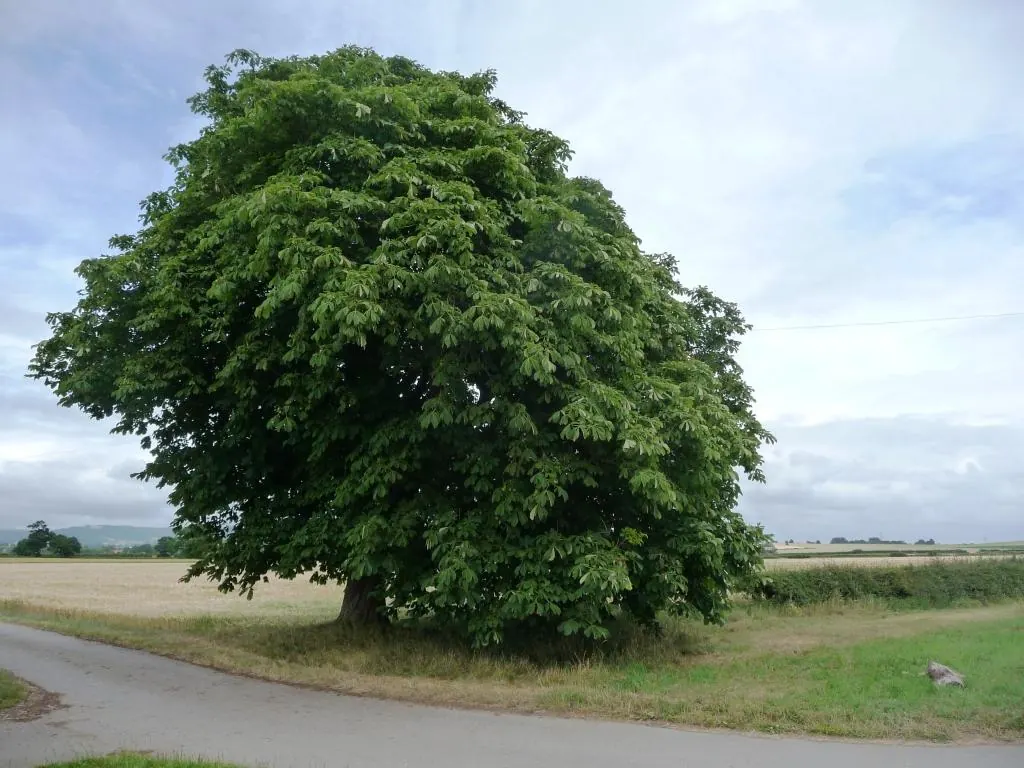
Leaves like an open hand of five to seven leaflets and, in spring, great candles of white flowers.
- LeafBroad and flat
- LeafLeaflets like a hand
- ShapeOval
- ShapeSpear-shaped
- EdgeToothed
- On the twigIn pairs, facing each other
- In winterNo, it loses them
- BarkFlaking in plates
- BarkSmooth
- FruitCapsule that splits open
The leaf
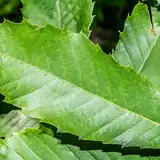
A palmately compound leaf, with five to seven large leaflets springing from the same point, broader towards the tip and with toothed edges. The leaves are opposite.
The bark
Greyish brown and smooth when young. On old trees it breaks into plates or scales that lift away.
The fruit
A green capsule with short, widely spaced spikes, which splits open in autumn to release one or two large, shiny brown seeds: conkers. They are not edible: they are poisonous.
The flower
White flowers with yellow or red blotches, in upright, candle-shaped clusters. It flowers in April and May.
- Jan
- Feb
- Mar
- Apr
- May
- Jun
- Jul
- Aug
- Sep
- Oct
- Nov
- Dec
Habit
A big, sturdy tree with a dense, rounded crown that gives plenty of shade.
Where it grows
It is planted in parks, promenades and squares, especially in cooler areas inland. It comes from the Balkans and on the coast it suffers in the summer heat and drought.
What it can be mistaken for
The sweet chestnut has simple, long leaves with pointed teeth, and its chestnuts come in a husk covered in fine, dense spines. The seeds look alike, but conkers are bigger and rounder and lack the chestnut's hairy tip.
A story
The aescin in its seeds is used in pharmacy for creams and tablets for varicose veins and poor circulation. In Britain children play conkers, trying to smash their opponent's seed tied to a string.
Find out more
- Tree: Christine Johnstone, CC BY-SA 2.0
- Leaf: Cwmhiraeth, CC BY-SA 3.0
- Bark: Spiritia, CC BY-SA 4.0
- Fruit: Jamain, CC BY-SA 3.0
- Flower: Abraham, CC BY 4.0