Trees · Betulaceae
Silver birch
Betula pendula
Spanish AbedulCatalan BedollNative10–25 mDeciduous
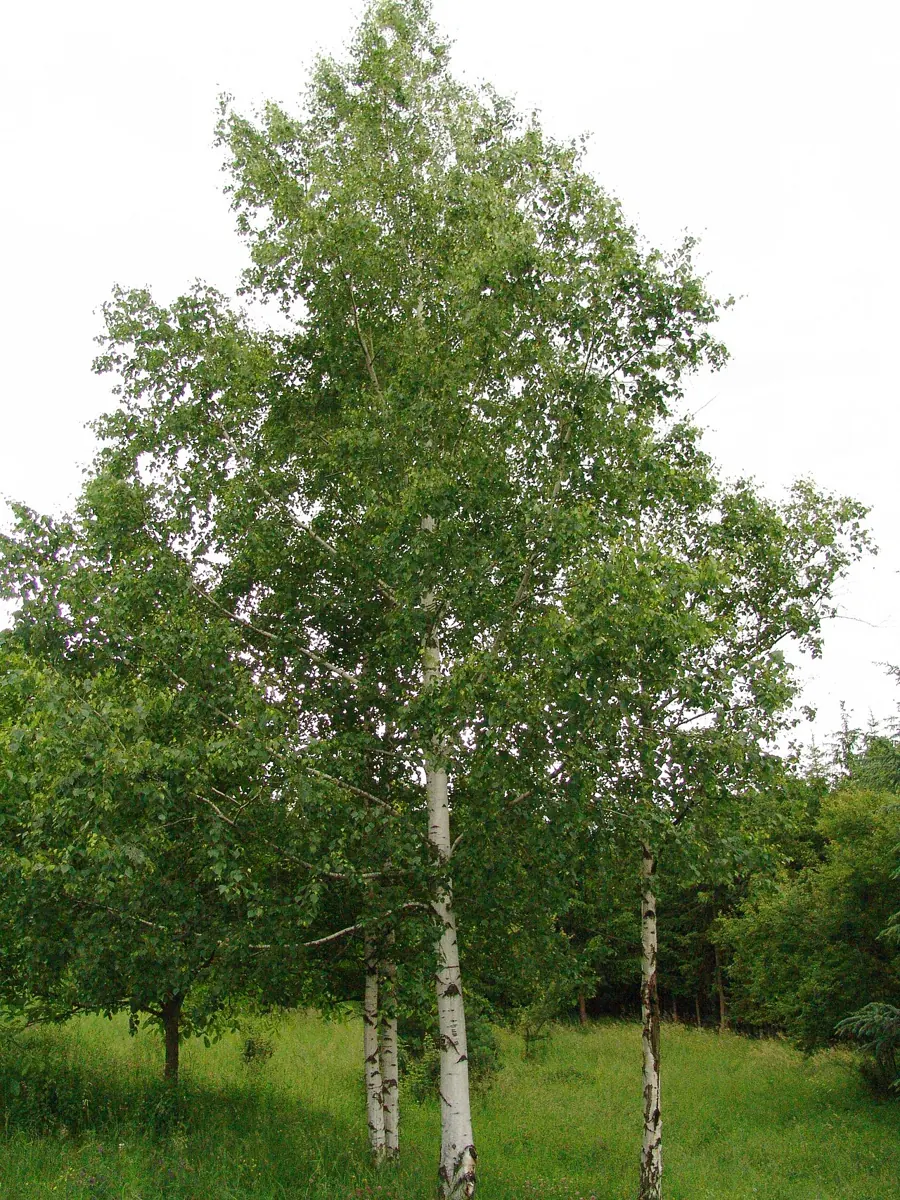
A white trunk with black marks and fine, drooping twigs.
- LeafBroad and flat
- LeafYes, a single blade
- ShapeTriangular
- EdgeToothed
- On the twigOne at a time, staggered
- In winterNo, it loses them
- BarkWhite
- FruitWinged
The leaf
The leaf is small, almost triangular or diamond-shaped, with a pointed tip. The edge has double teeth, large ones with smaller ones in between. It hangs from a slender stalk and moves in the wind.
The bark
The bark is white and peels off in thin, papery strips. At the base of old trees it turns black and breaks up into blocks, with diamond-shaped cracks.
The fruit
The fruits are tiny seeds with two wings, gathered in hanging cylindrical catkins, green at first and then brown. In autumn they fall apart and release the seeds to the wind.
The flower
It flowers in spring, as the leaves come out. The male catkins, long and yellowish, are already formed in winter; the female ones are short, green and upright.
- Jan
- Feb
- Mar
- Apr
- May
- Jun
- Jul
- Aug
- Sep
- Oct
- Nov
- Dec
Habit
A slender tree with a light crown and fine twigs that droop, especially on mature trees. It lets a lot of light through.
Where it grows
In Catalonia it grows wild in the Pyrenees and in a few spots in the Montseny, in woodland clearings and on acid soils. It is widely planted in parks and gardens across Catalonia.
What it can be mistaken for
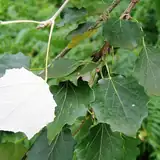
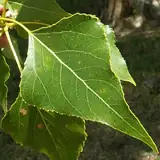
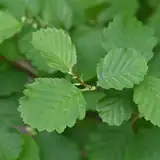
The white poplar also has a pale trunk, but with diamond-shaped marks and no papery strips, and its leaves are white underneath. The black poplar has larger triangular leaves and dark bark. The alder belongs to the same family, but its leaf has a blunt tip.
A story
The whiteness of the bark comes from betulin, a substance that reflects sunlight. In northern Europe birch sap is tapped in early spring to drink.
Find out more
- Tree: Georgi Kunev, CC BY 2.5
- Leaf: Andrikkos, CC BY-SA 3.0
- Bark: W.carter, CC0
- Fruit: Andrey Butko, CC BY-SA 3.0