Trees · Betulaceae
Alder
Alnus glutinosa
Spanish AlisoCatalan VernNative10–25 mDeciduous
A riverside tree with round, blunt-tipped leaves and little black cones on the branches.
- LeafBroad and flat
- LeafYes, a single blade
- ShapeRound
- ShapeOval
- EdgeToothed
- On the twigOne at a time, staggered
- In winterNo, it loses them
- BarkSmooth
- BarkFurrowed
- FruitCone
The leaf
The leaf is almost round, and the most striking thing is its tip: instead of ending in a point, it is blunt or has a small notch. The edge has double, irregular teeth. Young leaves are sticky, hence the name glutinosa, and in autumn they fall while still green.
The bark
On young trees the bark is smooth and dark grey, with pale speckles. With age it turns almost black and cracks into small plates.
The fruit
What look like tiny cones, one to two centimetres long, are the fruits. They start green, then become woody and dark and stay hanging on the branches all winter, next to the catkins for the following year.
The flower
It flowers in the depths of winter, before the leaves come out. The male catkins are long, hanging and purplish or yellowish; the female ones are small and reddish and turn into the little cones.
- Jan
- Feb
- Mar
- Apr
- May
- Jun
- Jul
- Aug
- Sep
- Oct
- Nov
- Dec
Habit
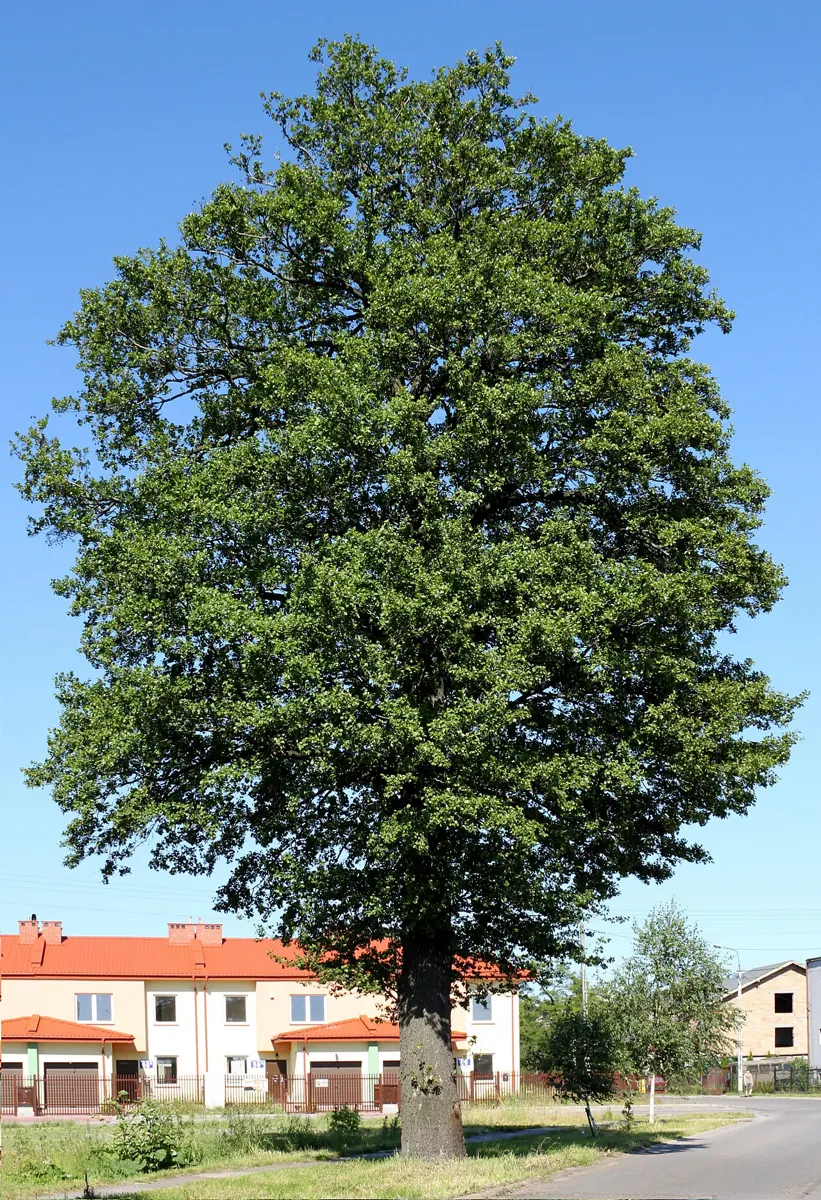
A tree with a straight trunk and a narrow crown, conical when young and more irregular later. It often forms lines that follow the water.
Where it grows
It needs its roots close to water all year round. In Catalonia it is common along rivers in the northern half, such as in the Montseny and the Pyrenees, and scarce along the dry streams of the south.
What it can be mistaken for
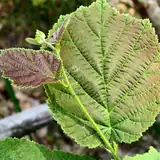
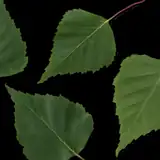
The hazel has similar leaves, but they end in a point and are larger, rough and heart-shaped at the base, and it usually grows as a clump of several stems. The silver birch, from the same family, has triangular leaves and a white trunk.
A story
Bacteria of the genus Frankia live in its roots, forming nodules that capture nitrogen from the air, so the alder fertilises the soil along the riverbanks. Its wood lasts a very long time underwater and has been used for piles and water pipes.
Find out more
- Tree: Crusier, CC BY-SA 3.0
- Leaf: Krzysztof Ziarnek, Kenraiz, CC BY-SA 4.0
- Bark: NobbiP, CC BY-SA 3.0
- Fruit: Agnes Monkelbaan, CC BY-SA 4.0