Trees · Fabaceae
Judas tree
Cercis siliquastrum
Spanish Árbol del amorCatalan Arbre de l'amorIntroduced4–10 mDeciduous
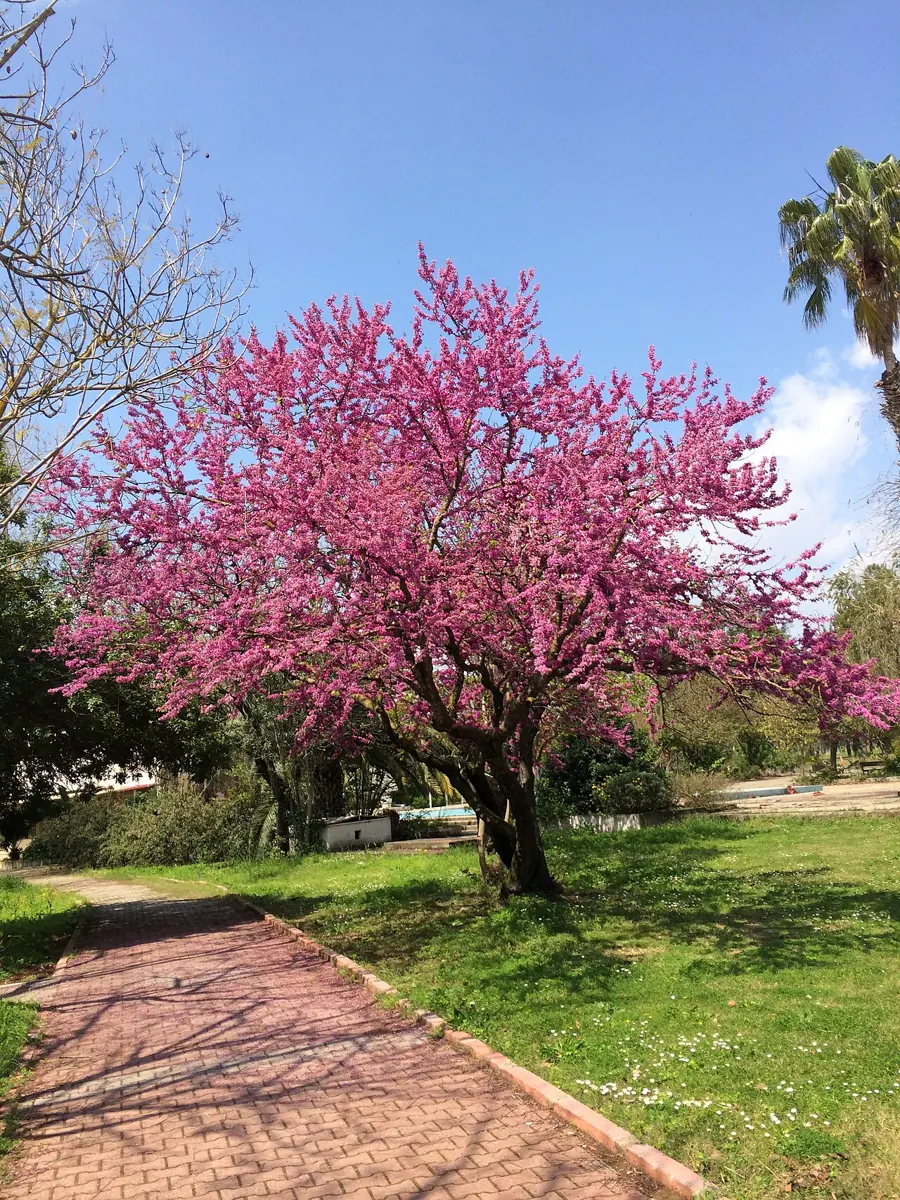
In March it is covered in fuchsia-pink flowers that sprout even from the trunk; then come leaves as round as coins.
- LeafBroad and flat
- LeafYes, a single blade
- ShapeRound
- ShapeHeart-shaped
- EdgeSmooth
- On the twigOne at a time, staggered
- In winterNo, it loses them
- BarkSmooth
- BarkFurrowed
- FruitPod
The leaf
A simple leaf, almost round or kidney-shaped, with a heart-shaped base and smooth edge. It is hairless, a slightly bluish green, and appears after the flowers.
The bark
Dark, almost black, smooth on young trees and finely cracked on old ones.
The fruit
Flat pods, 6 to 10 cm, that turn from green to reddish and then brown. They hang in bunches and stay on the tree for much of the winter.
The flower
Fuchsia-pink flowers shaped like tiny butterflies, in clusters that burst from the branches and even the trunk, before the leaves. It flowers in March and April.
- Jan
- Feb
- Mar
- Apr
- May
- Jun
- Jul
- Aug
- Sep
- Oct
- Nov
- Dec
Habit
A small tree, often with several trunks, with an irregular, rounded crown.
Where it grows
It is one of the most widely planted flowering trees in the streets, squares and gardens of Catalonia. It comes from the eastern Mediterranean and sometimes escapes onto nearby banks.
What it can be mistaken for
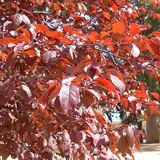
In flower it can recall the purple-leaf plum, but its flowers are a far more intense pink and grow straight out of old wood. Its round, smooth leaf is unlike that of any other street tree.
A story
Legend has it that Judas hanged himself from one of these trees, hence its English name. In Spanish and Catalan, though, it is the "tree of love", for its heart-shaped leaves. The flowers are edible and taste slightly sour.
Find out more
- Tree: Zeynel Cebeci, CC BY-SA 4.0
- Leaf: JLPC, CC BY-SA 3.0
- Bark: Didier Descouens, CC BY-SA 4.0
- Fruit: Isasza, CC0
- Flower: Pdassori, CC BY-SA 4.0