Trees · Platanaceae
London plane
Platanus × hispanica
Spanish Plátano de sombraCatalan PlàtanIntroduced20–35 mDeciduous
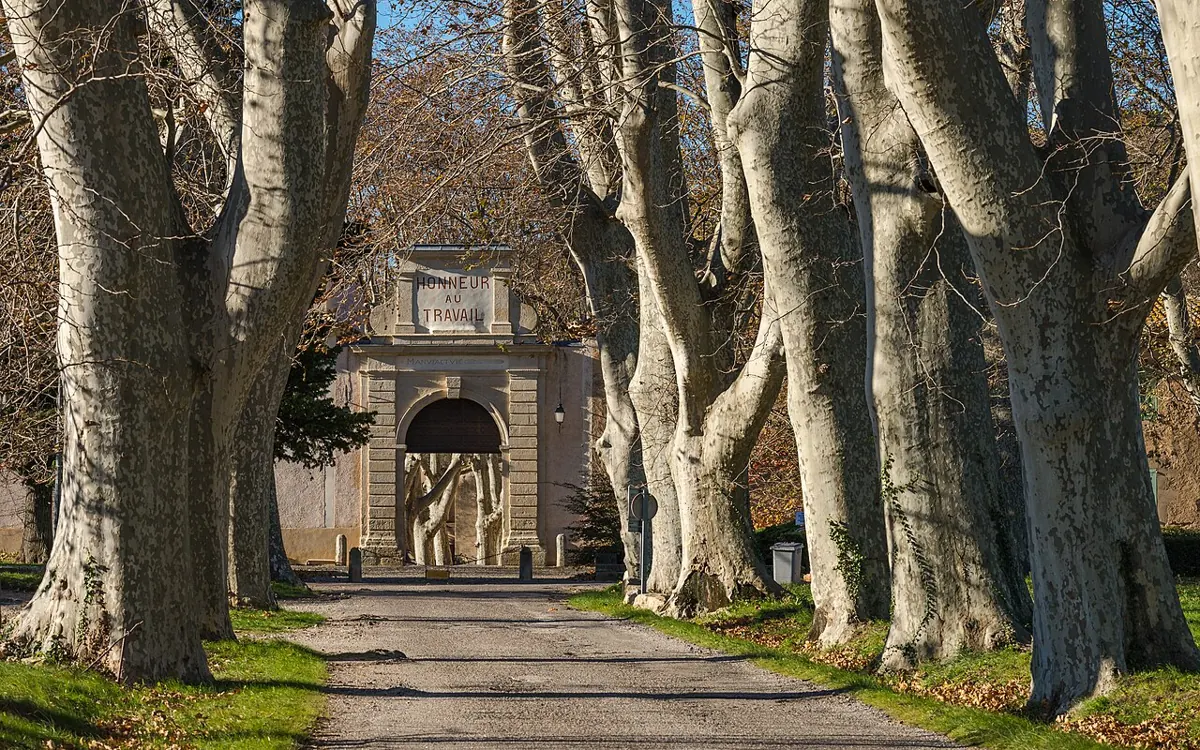
The avenue tree: a trunk mottled green, grey and cream, and hanging balls all winter long.
- LeafBroad and flat
- LeafYes, a single blade
- ShapeLike a hand
- EdgeWavy or lobed
- EdgeToothed
- On the twigOne at a time, staggered
- In winterNo, it loses them
- BarkFlaking in plates
- FruitHanging balls
The leaf
A large, simple leaf with three to five hand-like lobes and a few big teeth. Young leaves have a fuzz that comes off and can be irritating. They grow alternately, which sets it apart from the maples.
The bark
It flakes off in thin plates, leaving patches of green, grey, yellowish and cream. It is unmistakable and lasts the tree's whole life.
The fruit
Bristly balls about 3 cm across, hanging singly or in pairs from a long stalk. They stay on the tree through winter and break up into fluff in spring.
The flower
Tiny flowers packed into hanging balls, green for the female ones and yellowish for the male. They come out in spring with the leaves.
- Jan
- Feb
- Mar
- Apr
- May
- Jun
- Jul
- Aug
- Sep
- Oct
- Nov
- Dec
Habit
A very large tree with a straight trunk and a wide crown. In towns it is usually pruned and forms tunnels of shade over the streets.
Where it grows
It is the most planted tree in the streets of Barcelona and lines almost every rambla, promenade and tree-lined road in Catalonia. It also runs wild along rivers.
What it can be mistaken for
The leaf looks like a maple's, such as the field maple, but maples have opposite leaves and their bark doesn't flake in plates. The fig has similar leaves, but rough and thick.


A story
It is a hybrid between the Oriental plane and the American sycamore that appeared in European gardens in the 17th century. It puts up with pruning, pollution and compacted soil, which is why cities are full of it.
Find out more
- Tree: Christian Ferrer, CC BY-SA 3.0
- Leaf: DeFacto, CC BY-SA 4.0
- Bark: Krzysztof Golik, CC BY-SA 4.0
- Fruit: Hladac, CC BY-SA 4.0