Trees · Ulmaceae
Field elm
Ulmus minor
Spanish OlmoCatalan OmNative15–30 mDeciduous
A toothed leaf with a lopsided base, one side longer than the other.
- LeafBroad and flat
- LeafYes, a single blade
- ShapeOval
- EdgeToothed
- On the twigOne at a time, staggered
- In winterNo, it loses them
- BarkFurrowed
- FruitWinged
The leaf
The leaf is oval, with double teeth along the edge and a short pointed tip. The key detail is the asymmetric base: one half of the leaf starts lower down than the other. The upper side is glossy and slightly rough.
The bark
The bark is greyish-brown and cracks into deep furrows, forming long plates. Some young branches develop corky ridges.
The fruit
The fruits are round, flat samaras about a centimetre across, with the seed in the middle surrounded by a thin wing and a small notch at the top. They appear en masse before the leaves, in pale green clusters that look like new leaves, and soon fall.
The flower
It flowers in late winter, on bare branches. The flowers are tiny and reddish, in small clusters, and barely noticeable.
- Jan
- Feb
- Mar
- Apr
- May
- Jun
- Jul
- Aug
- Sep
- Oct
- Nov
- Dec
Habit
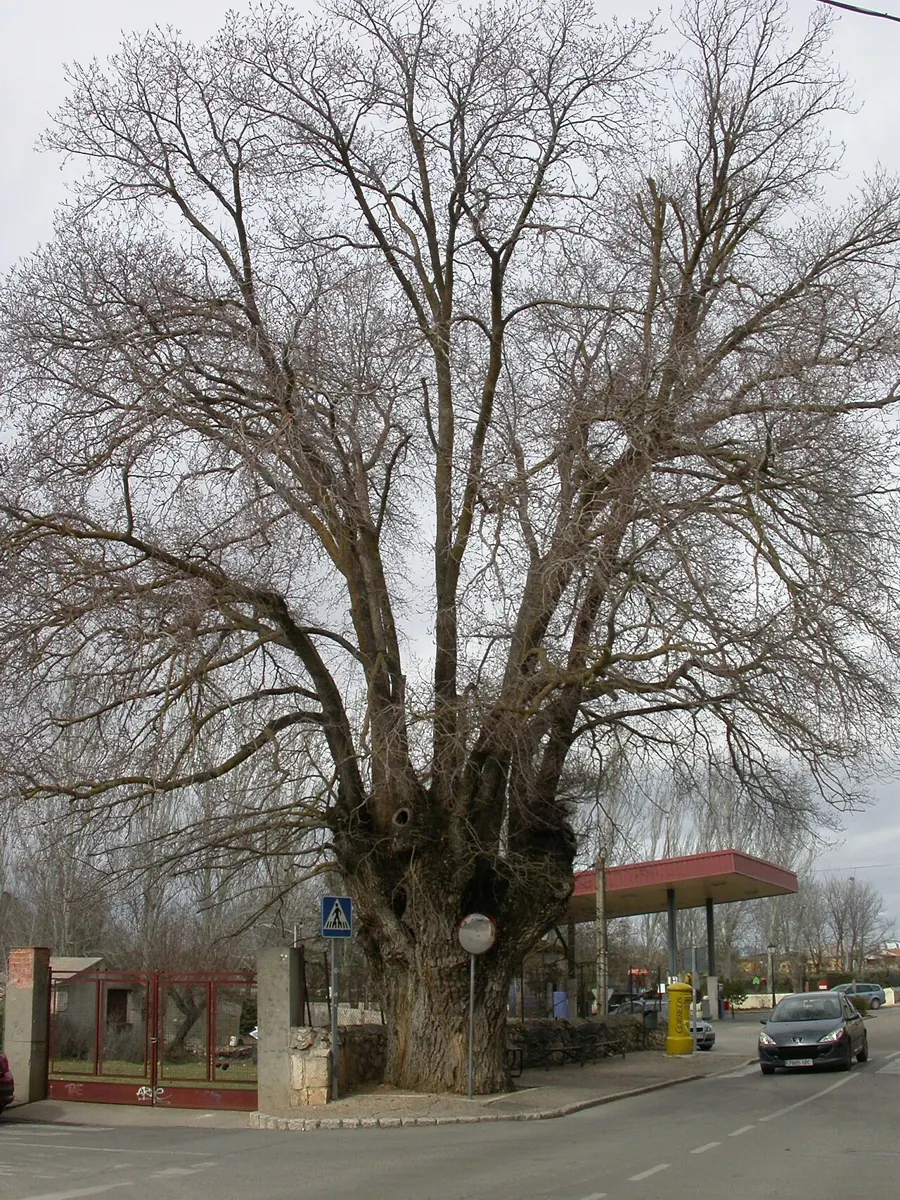
Large elms have thick trunks and broad, dense crowns. Today they are far more often seen as young saplings or as hedges of suckers, because a disease killed most of the mature trees.
Where it grows
It grows along riverbanks, on valley floors and at the edges of fields and roads throughout Catalonia. For centuries it was the tree of the village square and the promenade.
What it can be mistaken for
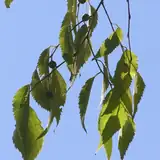
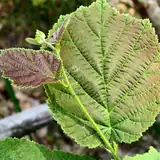
The nettle tree has similar leaves, also with a slightly lopsided base, but narrower and ending in a long point, plus smooth bark and fleshy fruits. The hazel has a rounder, hairy leaf with a heart-shaped base.
A story
From the 1980s onwards Dutch elm disease, a fungus spread by beetles, killed almost all the large elms in Spain. The elm survives because it sprouts again from the roots, but once the suckers grow thick they usually fall ill again.
Find out more
- Tree: Miguelgalm, CC BY-SA 3.0
- Leaf: Daniel Capilla, CC BY-SA 4.0
- Bark: Ptelea, CC BY-SA 4.0
- Fruit: Rosser1954, CC BY-SA 4.0